

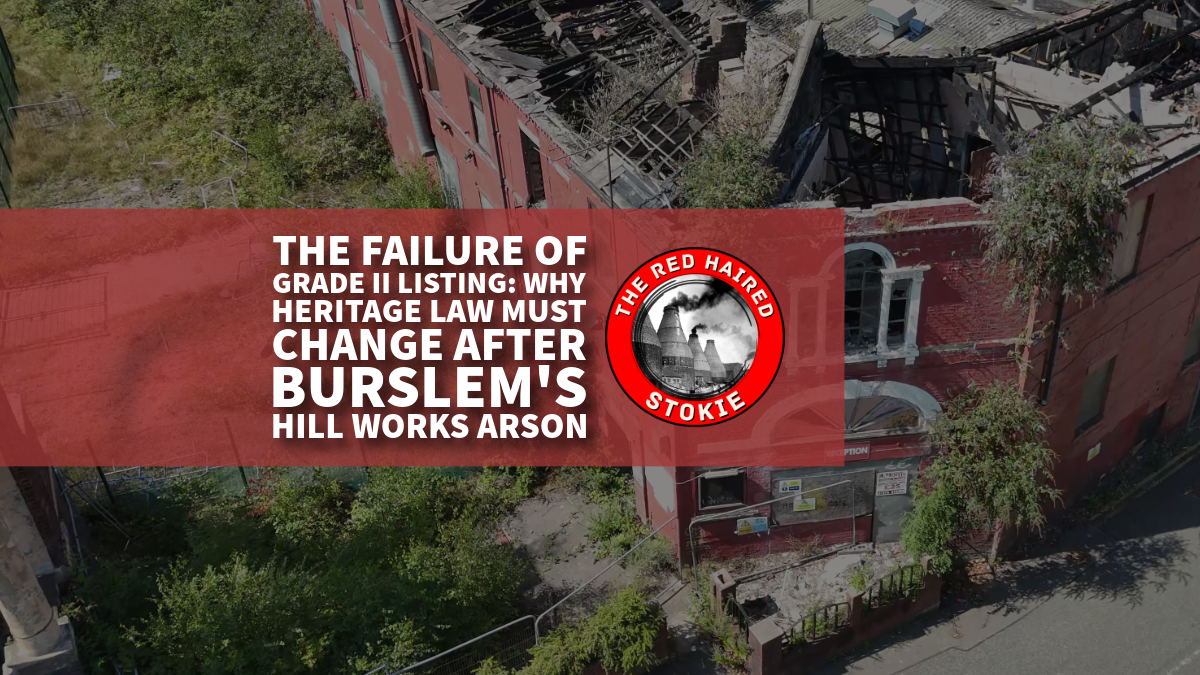
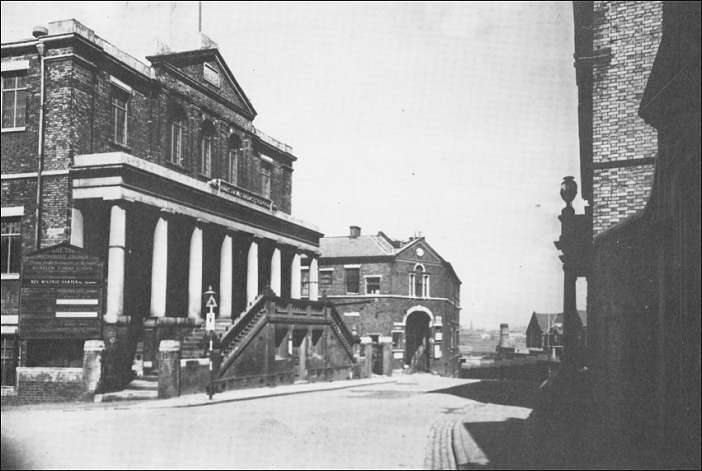
Built in 1814 by the Riley Brothers, this Grade II listed Venetian-façade pottery was an architectural and industrial cornerstone of Stoke-on-Trent for two centuries. Its story, from the production of beloved 'Quack-quack' sets to wartime resilience, ended not by economic decline, but by fifteen years of neglect followed by deliberate arson.
Watch the full video here on YouTube
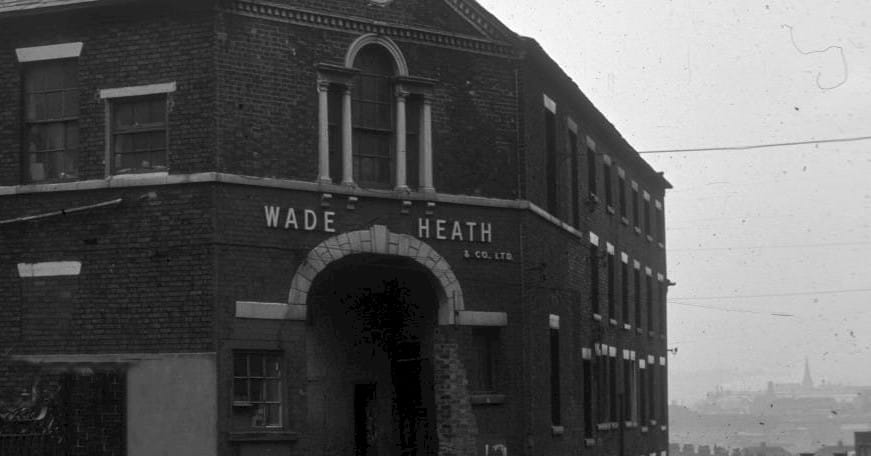
A Heritage Undone: Two Centuries of Industry
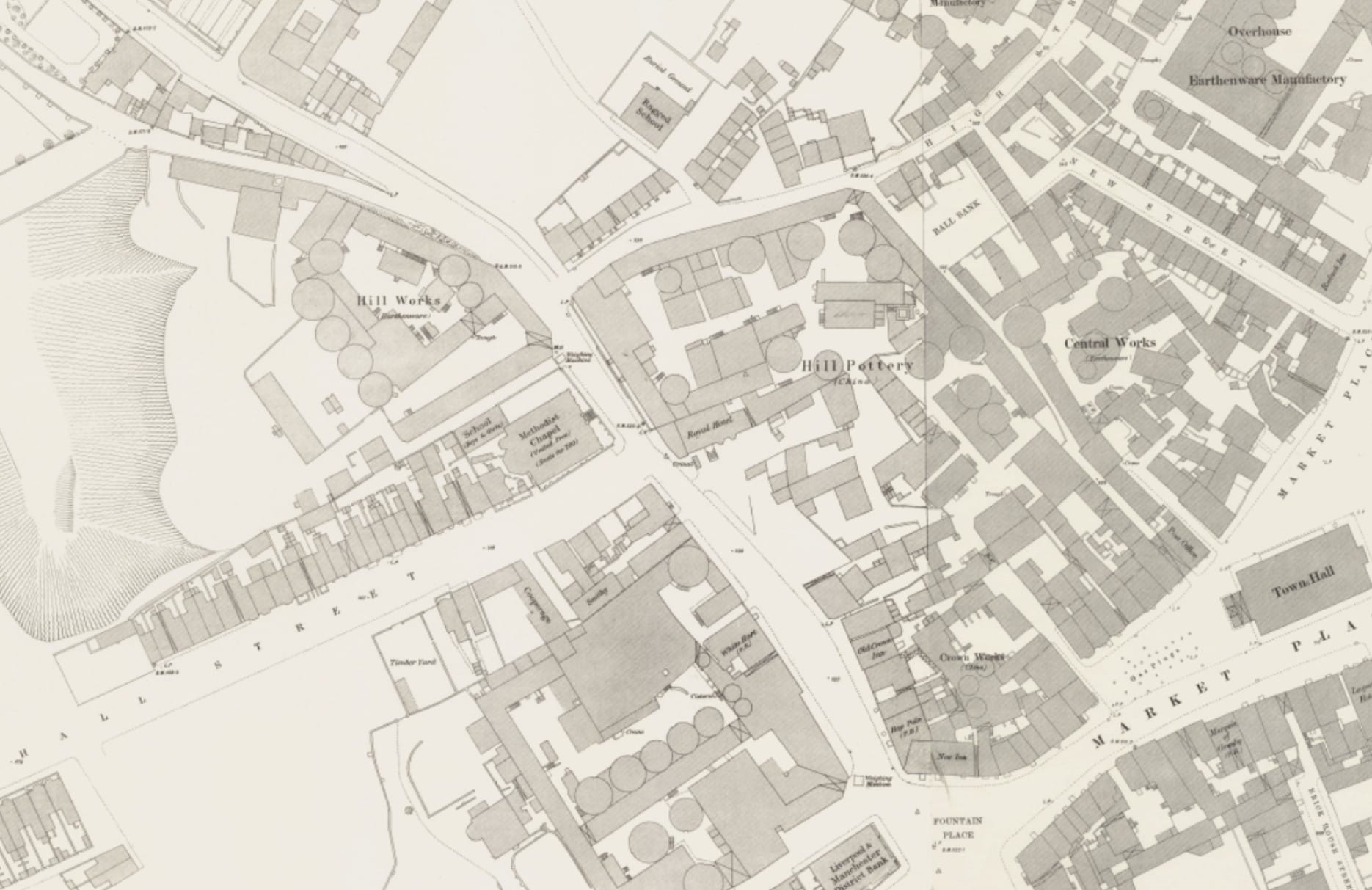
For nearly two centuries, the Hill Works, later Wade Heath's Royal Victoria Pottery, witnessed the city's industrial evolution. Its striking Venetian façade, which mirrored the architectural ambition of nearby landmark factories like Enoch Wood's Fountain Place Works, was an expression of confidence by the founders, John and Richard Riley. The site itself was in use for pottery production even before the Rileys arrived, meaning kilns had likely been fired continuously here for at least 150 years before the 1814 structure was even built.
The works stood on Liverpool Road (now Westport Road), the main artery connecting Burslem to the port of Liverpool, ensuring finished goods were swiftly dispatched into the global supply chain. The arched coach entrance, a defining feature of early 19th-century potworks, symbolically welcomed deliveries and sent Stoke-on-Trent's name worldwide.
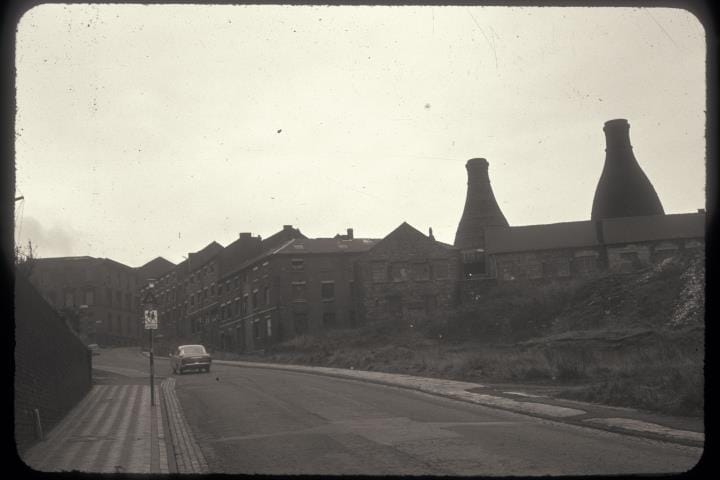
The succession of manufacturers who occupied the works reflects the ebb and flow of the ceramics industry:
- 1814: Built by the Riley Brothers, an ambitious statement of pottery architecture.
- 1830: Taken over by the major manufacturer, Samuel Alcock and Co.
- Later: Occupied by a succession of firms, including Dunn Bennett.
- 1954: Taken over by Wade Heath & Co. Ltd, who traced their roots back to the late eighteenth century.
Wade Heath transformed it into the Royal Victoria Pottery, producing everything from elegant copper lustre wares to their famous novelty items, including small animal figures, Wade Whimsies and the beloved 'Quack-quack' nursery rhyme set. Even during wartime, the company demonstrated resilience, adapting production to heavy white ware for the forces.
- 2010: Wade Ceramics moves to new headquarters, and the building joins the city's growing list of empty heritage sites.
For fifteen years, this monumental structure stood vacant, a shelter for rough sleepers and an irresistible target. Then, on 27 April 2025, arson reduced much of the roof to ashes, requiring six fire crews and eight appliances to control. Westport Road was closed for 180 days for the eventual demolition of the fire-gutted ruin, which still hasn't been completed.
The Uncomfortable Truth: Listing Failed
The Hill Works’ Grade II listing should have been its shield; instead, it became an epitaph. The loss exposes a devastating pattern in Stoke-on-Trent: closure, abandonment, deterioration, fire, demolition.
Grade II listing provided protection on paper, but zero practical defence against neglect and arson. If anything, the listing may have complicated and slowed down any potential regeneration efforts while the building stood vulnerable. It became a piece of complex, costly paperwork protecting an empty structure that the owners, Miller Homes, were only able to stabilise after months of specialist demolition and repair work.
We must confront the reality: historical acknowledgement is useless when the physical heritage is left to burn. We are preserving nothing but paperwork while the buildings themselves crumble and burn.
A New System for Preservation is Overdue
The fate of the Hill Works demands a fundamental debate about the efficiency of heritage protection. We cannot afford to lose another irreplaceable piece of our industrial identity.
| Proposed Measure | Rationale |
| Substantial Punishments for Neglect | Levy escalating fines or enact compulsory purchase orders (CPOs) when owners allow listed properties to deteriorate or stand empty for years, forcing their hands. |
| Owner Liability for Arson Damage | Make owners legally responsible for the full cost of rebuilding to original specifications, or at least preserving the façade, if a neglected and unsecured listed building is deliberately set on fire. |
| Mandatory Façade Preservation | Require street-facing façades (like the Hill Works’ Venetian front) to be retained and integrated into any redevelopment, ensuring the city's visual history survives. |
| Annual Public Inspection Regime | Implement mandatory, public annual inspections for all empty listed buildings, allowing for swift intervention if maintenance standards are breached. |
| Community Right to Purchase | Grant local heritage organisations or community groups the statutory right to purchase long-term vacant listed buildings at a fair rate, preventing land-banking and decay. |
The Stakes: Irreplaceable Loss
The battle is not against change, but against total, avoidable loss. The Hill Works could have been converted into apartments, offices, or mixed-use spaces, its 1814 façade a proud reminder of the city's foundation. Cities worldwide successfully adapt historic industrial buildings for modern use. Instead, future generations will see a modern building, utterly divorced from the history that once defined that corner of Burslem.
We cannot recreate the authenticity, the craftsmanship, or the historical texture of 1814. Every time we lose a building like the Hill Works, we lose a vital chapter of Stoke-on-Trent's story, eroding the very identity bound up in its industrial past. These buildings are central to who we are.
The Hill Works deserved better. The next at-risk building must get better. It is time to replace polite listing with robust legislation that has real teeth, penalties that sting, and a system that genuinely prioritises the preservation of our physical history over the profit and convenience of property owners.
If you would like to escape the algorithms and connect more closely with my work, you can join me on Patreon for behind the scenes content, live videos, early access and a community space away from social media.
