The Leek Double Sunset, Staffordshire’s Strange Midsummer Wonder
Every midsummer, Leek’s famous double sunset connects the Staffordshire Moorlands with ancient skies, medieval history, hidden tunnels and one of the town’s most unusual traditions.

Every town has stories that seem to belong to it so completely that, over time, they become part of its character. They are not only remembered by local people, but written into the landscape, carried in folklore, recorded in old books and, in Leek’s case, placed on the town’s coat of arms. Among the most remarkable of these stories is the Leek Double Sunset, a midsummer phenomenon that has fascinated local people, antiquarians, astronomers and historians for centuries, and which will once again draw people out into the Staffordshire Moorlands on Sunday, 21 June 2026.
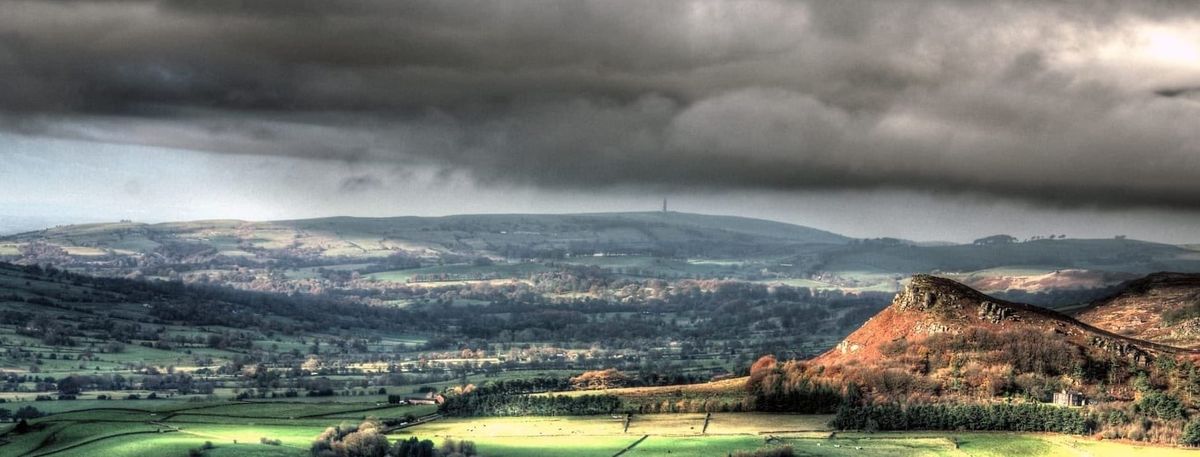
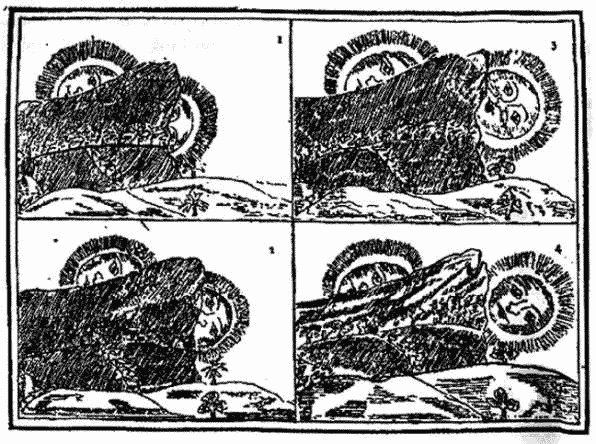
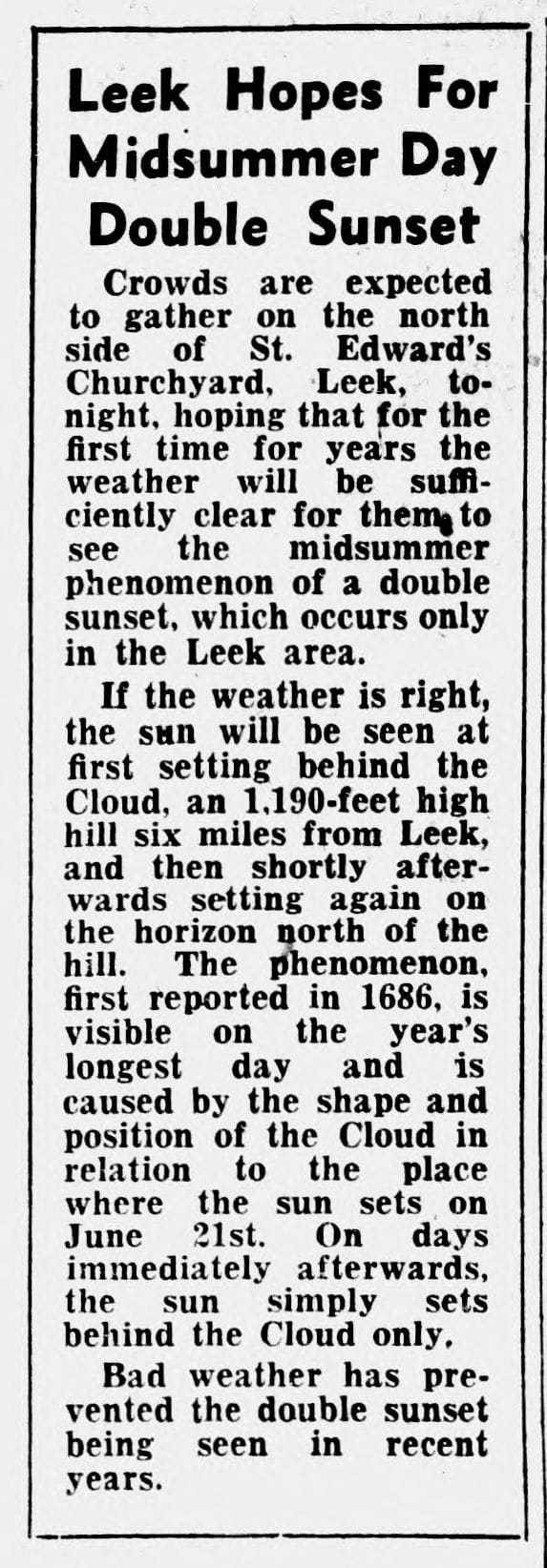
At first, the idea sounds almost impossible, because a sunset feels like something final. Yet around the summer solstice, when the weather is clear and the horizon can be seen properly, the sun appears to set behind The Cloud, the distinctive hill near Congleton, before reappearing and then setting for a second time. It is not magic, although it is easy to understand why earlier generations may have felt that it was, because what is really being seen is the result of a very particular relationship between the sun, the shape of the land and the place from which the viewer is standing.
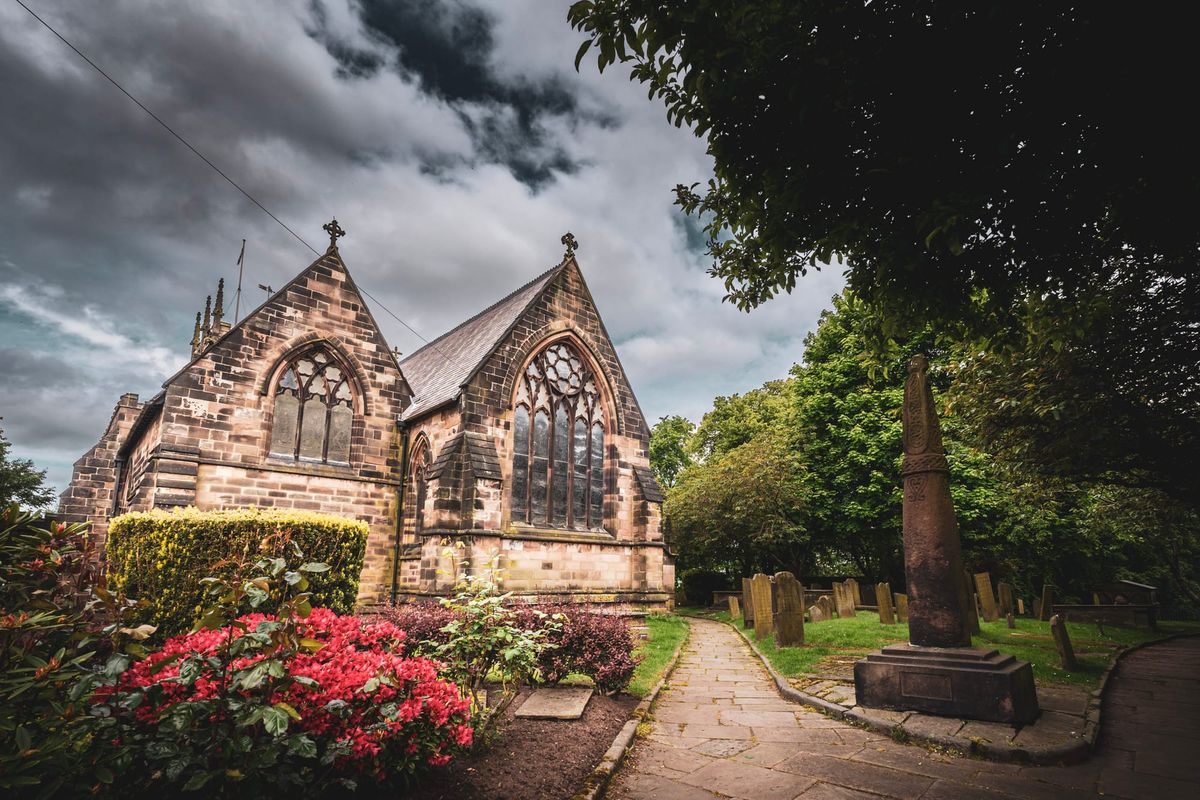
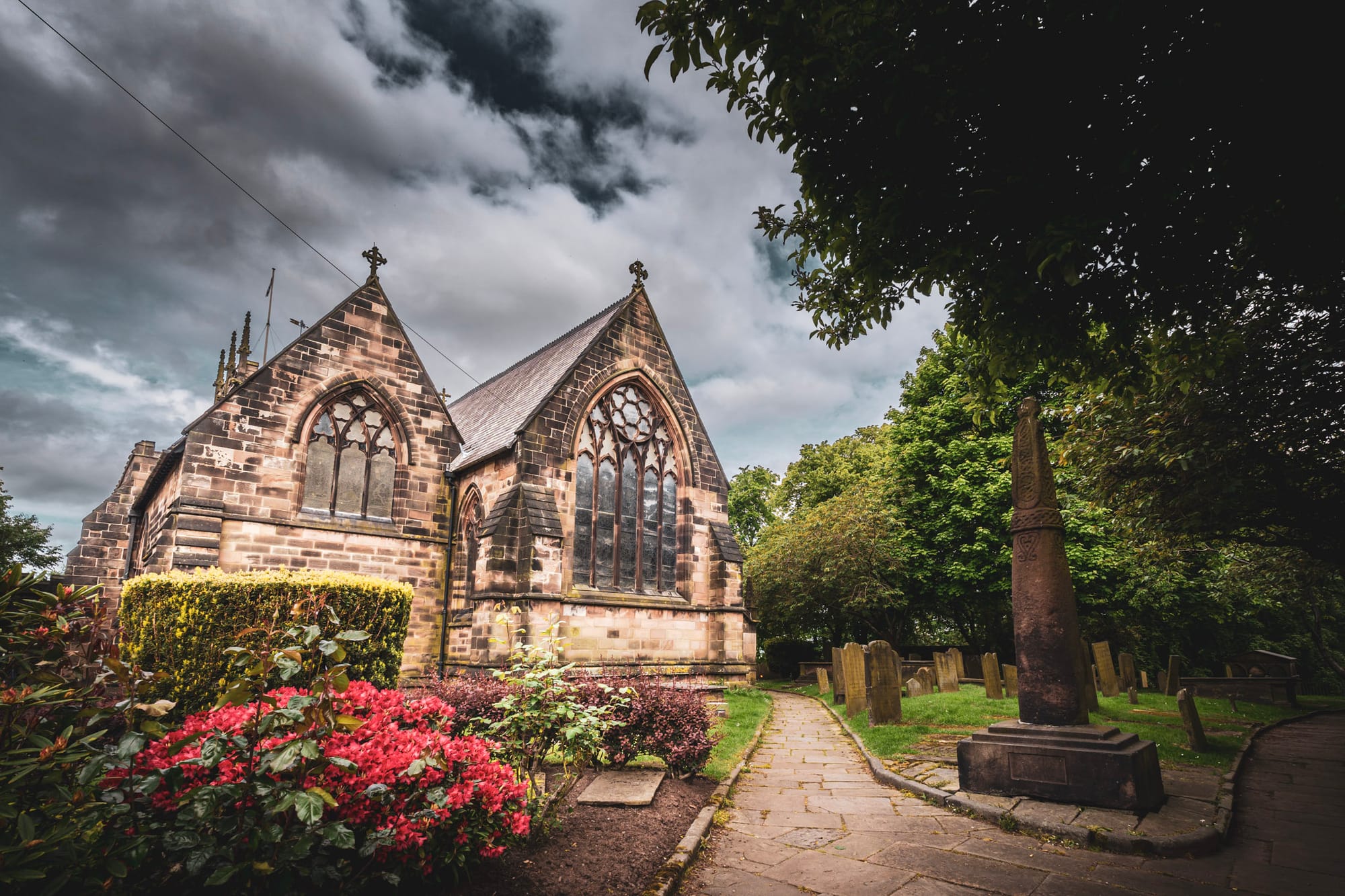
For centuries, the traditional place to watch this unusual event was the churchyard of St Edward the Confessor in Leek, a medieval church standing in the historic heart of the town. Today, that old view from the churchyard is much more difficult, because trees and changes in the landscape now obscure the sightline that once made the phenomenon famous. Even so, the story has lost none of its importance, because the Leek Double Sunset is not just a curious trick of the light. It is a thread that ties together the town’s medieval church, possible prehistoric alignments, the writings of Dr Robert Plot, the hidden tunnels beneath St Edward’s, the shape of The Cloud and the civic identity of Leek itself.
What the Leek Double Sunset is
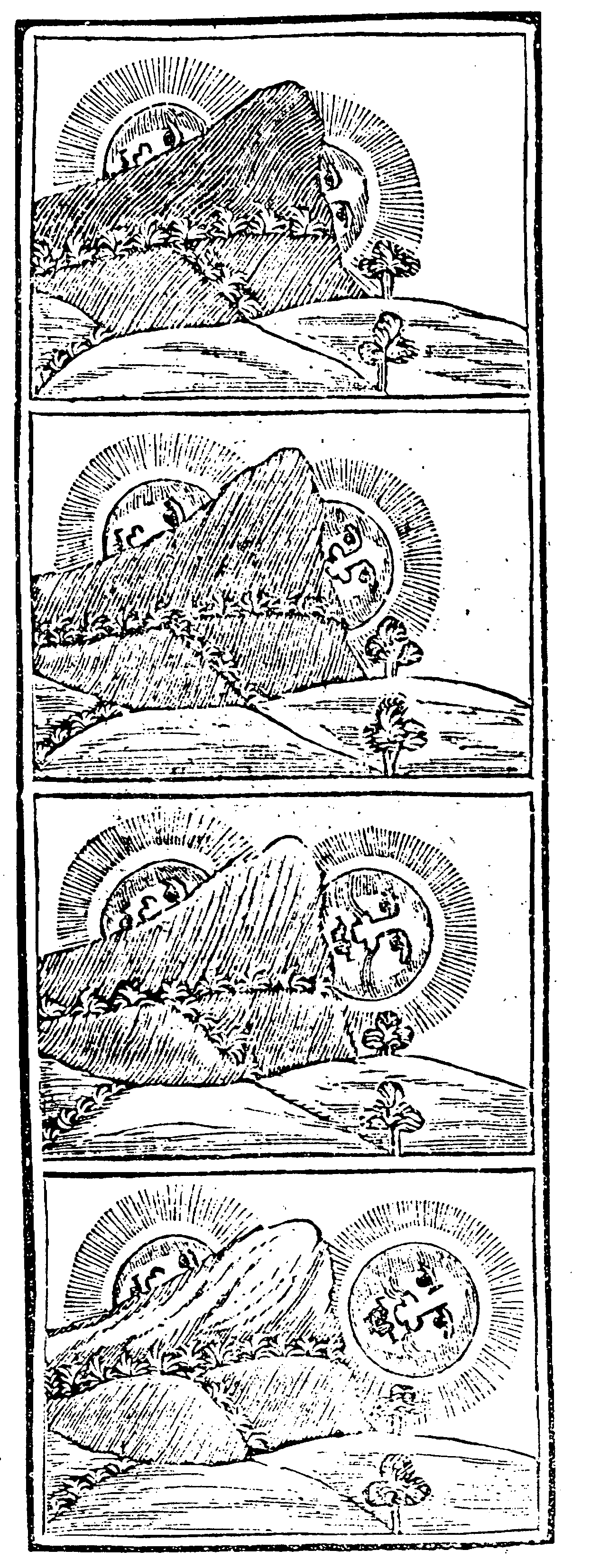
The Leek Double Sunset takes place around the summer solstice, when the sun sets in such a position that it appears to disappear behind The Cloud, a prominent hill on the Cheshire and Staffordshire horizon, before emerging again from behind the side of the hill and then setting once more beyond the more distant high ground. To anyone watching from the right place, the effect is simple to understand but extraordinary to witness, because the sun seems to sink away, vanish, return and then finally disappear for the night.
The phenomenon depends entirely on position, because the viewer must be standing in a place where the line of sight towards The Cloud meets the setting sun at just the right angle. For generations, that place was understood to be the churchyard of St Edward the Confessor in Leek, which is why the story became so strongly attached to the church. The building itself is not the cause of the double sunset, but the site on which it stands gave people one of the best historic vantage points from which to witness it.
This also explains why the phenomenon can be so difficult to see. A few trees in the wrong place, a small change in viewing position, cloud along the horizon or haze in the evening sky can be enough to hide the spectacle completely. The double sunset has always depended on a delicate meeting of place, sky and season, which is part of what makes it so remarkable.
Dr Robert Plot and the first famous account
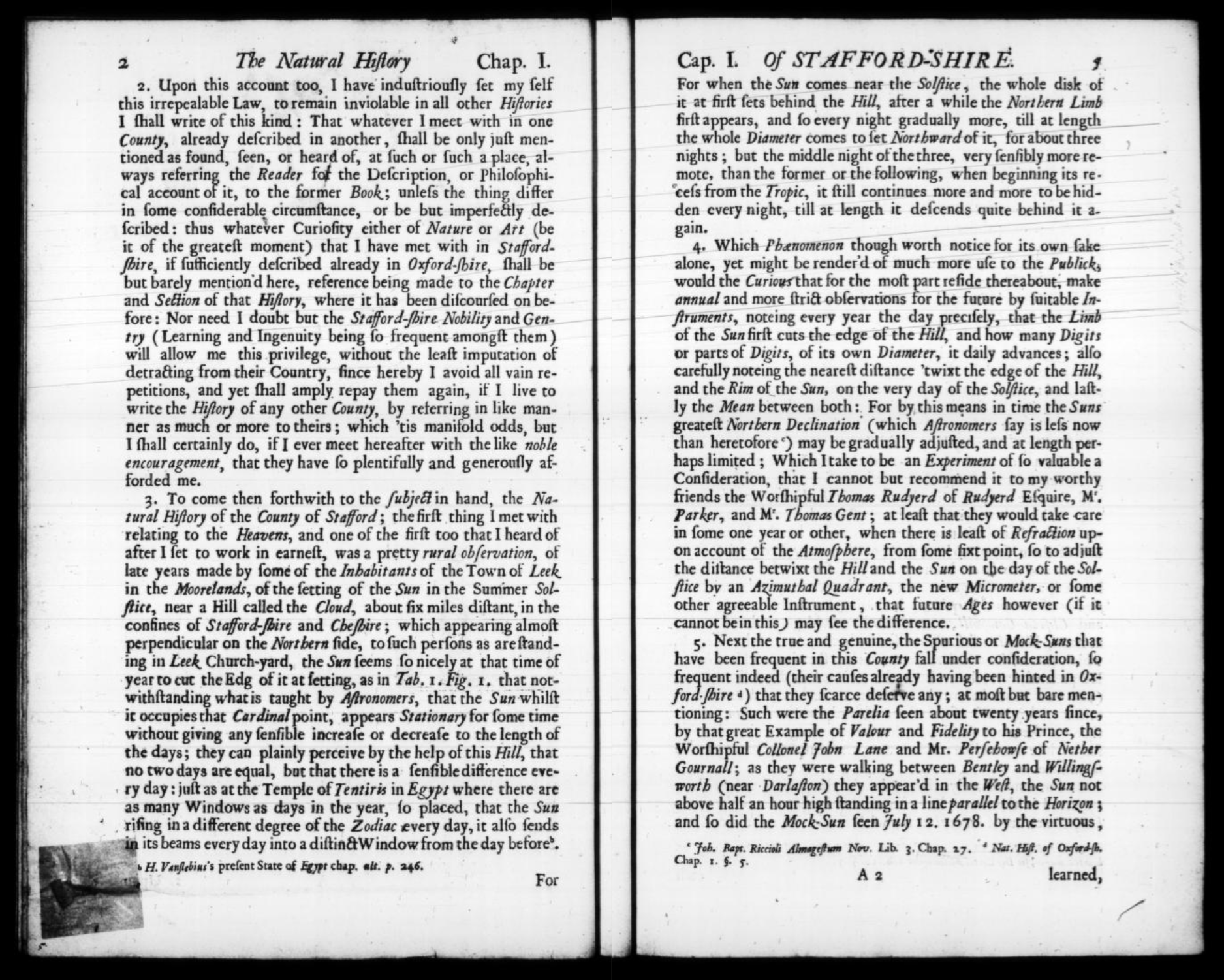
The most famous early written account of the Leek Double Sunset comes from Dr Robert Plot, who described the phenomenon in The Natural History of Staffordshire, published in 1686. Plot was not simply collecting odd local stories for entertainment, because he was Keeper of the Ashmolean Museum and Professor of Chemistry at Oxford, and his account of Staffordshire was part of a serious attempt to record the county’s natural history, antiquities, curiosities and landscape.
In his description of the Leek Double Sunset, Plot explained how a spectator standing in the churchyard at Leek could watch the sun set behind the hill known as The Cloud, before seeing it reappear and set again. He wrote that:
“a spectator standing there of an evening three or four days before the 10th of June, beholds the disk of the sun gradually emerging from beyond the northward side of the hill”
That date can seem confusing today, because Plot was writing before the Gregorian calendar was adopted in Britain in 1752, when 11 days were added to bring the calendar back into alignment. This is why the midsummer date connected with the phenomenon is now around 21 June rather than the date given by Plot.
What makes his account so fascinating is that he did not treat the double sunset as a mere curiosity. He recognised that it could have scientific value, particularly in relation to measuring changes in the earth’s axial tilt, known as the obliquity of the ecliptic. In other words, this strange Staffordshire sunset was not only a local wonder, but something that a 17th century scholar thought might help people understand the movement of the earth itself.
The Cloud and the hill that makes the illusion possible
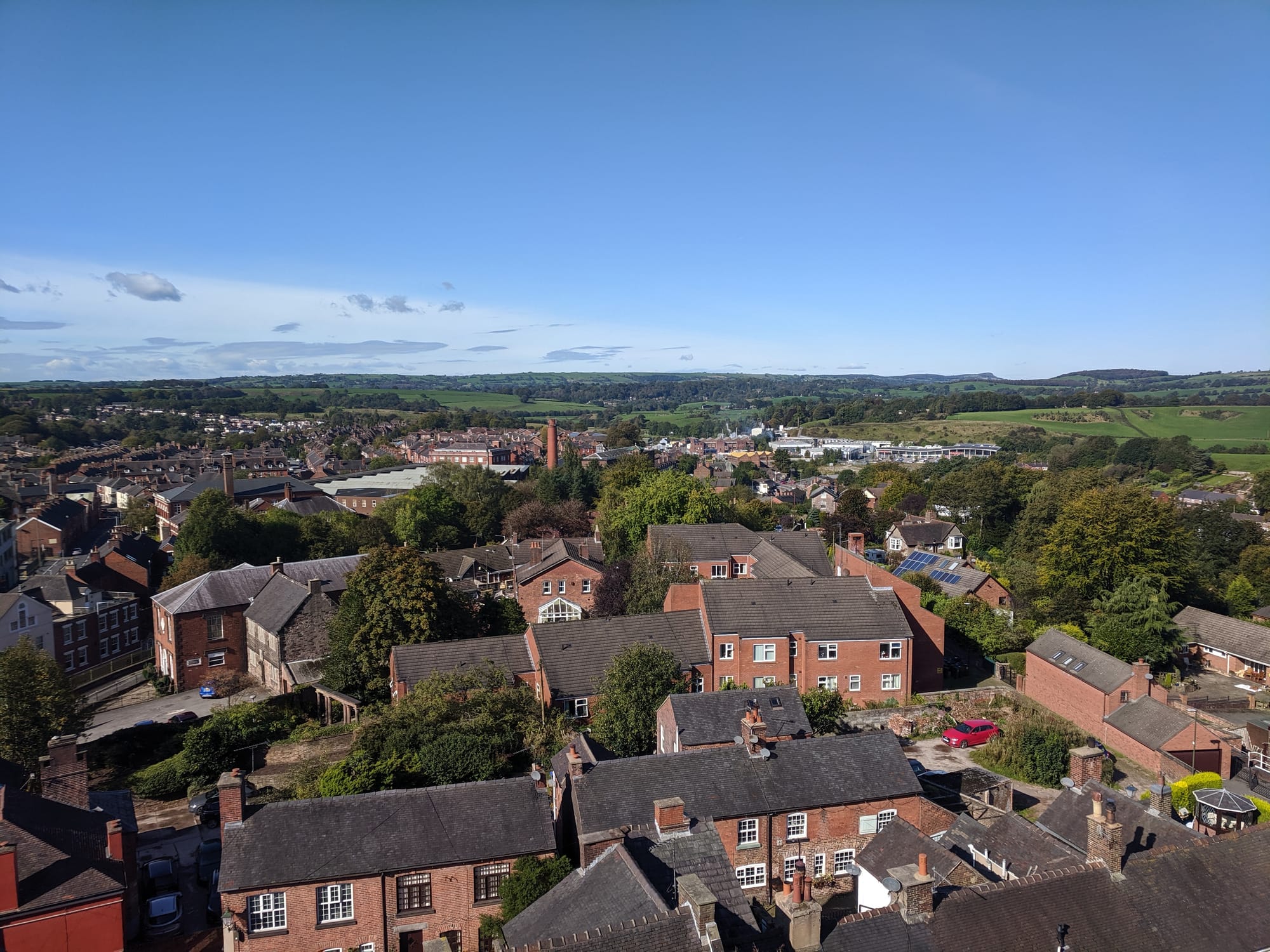
The hill that makes the Leek Double Sunset possible is The Cloud, also known as Bosley Cloud, which lies near Congleton and forms a distinctive part of the north western horizon when viewed from Leek. From the churchyard of St Edward’s, The Cloud historically presented the exact kind of profile needed for the sun to be hidden, then revealed, then hidden again.
The shape of the hill has changed over time, because quarrying in the early 19th century removed part of its northern side. One feature once associated with the hill was known locally as Bully Thrumble, a tall stone column that was demolished during quarrying, with stone from The Cloud being used in important engineering works connected with the Macclesfield Canal and the crossing of the River Dane.
That detail matters because the double sunset is not a fixed monument or a permanent object. It is a moving relationship between a particular viewing point, a particular hill and the position of the sun at a particular time of year. Even a small change in the shape of the land or the place from which the sunset is watched can alter the experience, which is why the phenomenon belongs not only to astronomy, but also to geography, geology, history and memory.
Kevin Kilburn and the modern astronomical study
More than 300 years after Robert Plot recorded the double sunset, the phenomenon was investigated in detail by Kevin Kilburn, Fellow of the Royal Astronomical Society, who began looking into it in August 1998. Kilburn’s research was later published in 1999 in Astronomy & Geophysics, the journal of the Royal Astronomical Society, and a shortened version was published by the Manchester Astronomical Society under the title Dr Plot and the Amazing Double Sunset.
Using modern astronomical software, photographs and a computer generated profile of The Cloud, Kilburn examined how the solstitial sunset would have appeared from Leek over thousands of years. One of the most interesting points from his work is that the double sunset, as viewed from the church site, has not always existed and will not always continue, because the earth’s axial tilt changes gradually over vast periods of time, moving the solstitial sunset along the horizon.
Kilburn suggested that from the site of St Edward’s Church, the double sunset may have begun around the Iron Age, approximately 500 BC, and that it will eventually cease to be visible from the churchyard alignment after about AD 2500. That idea changes how we should look at the event, because the double sunset is not simply old. It is temporary on a grand timescale, and we happen to be living in the stretch of history when it can still be seen.
Whether the church site mattered before the church
One of the most intriguing questions raised by the Leek Double Sunset is whether the hilltop site of St Edward the Confessor had significance long before the present church was built there. This cannot be stated as proven fact, because there has been no excavation of the immediate area that would allow anyone to say with certainty that the church stands on a prehistoric sacred site, but there are several reasons why the idea has interested researchers.
The church stands on an elevated position in the historic centre of Leek, and nearby place names such as Foxlowe are interesting because the word “low” is often associated in the Staffordshire Moorlands and surrounding areas with ancient burial mounds, tumuli and prehistoric sites, particularly those set on hills. There are also records of prehistoric finds elsewhere in and around Leek, while the wider Moorlands landscape is rich with ancient sites, burial places, natural alignments and hilltop locations that would have mattered deeply to earlier communities.
Kevin Kilburn argued that the precision of the Leek alignment, together with the wider pattern of prehistoric activity in the area, raised the possibility that the church site may once have belonged to a much older sacred landscape. That does not mean we should imagine a neat and simple line from prehistoric sun worship to the medieval church, because history is rarely that tidy. It does, however, suggest that the place on which St Edward’s stands may have mattered to people long before the first stone church was built there.
Cock Low, Westwood and the lost prehistoric mound
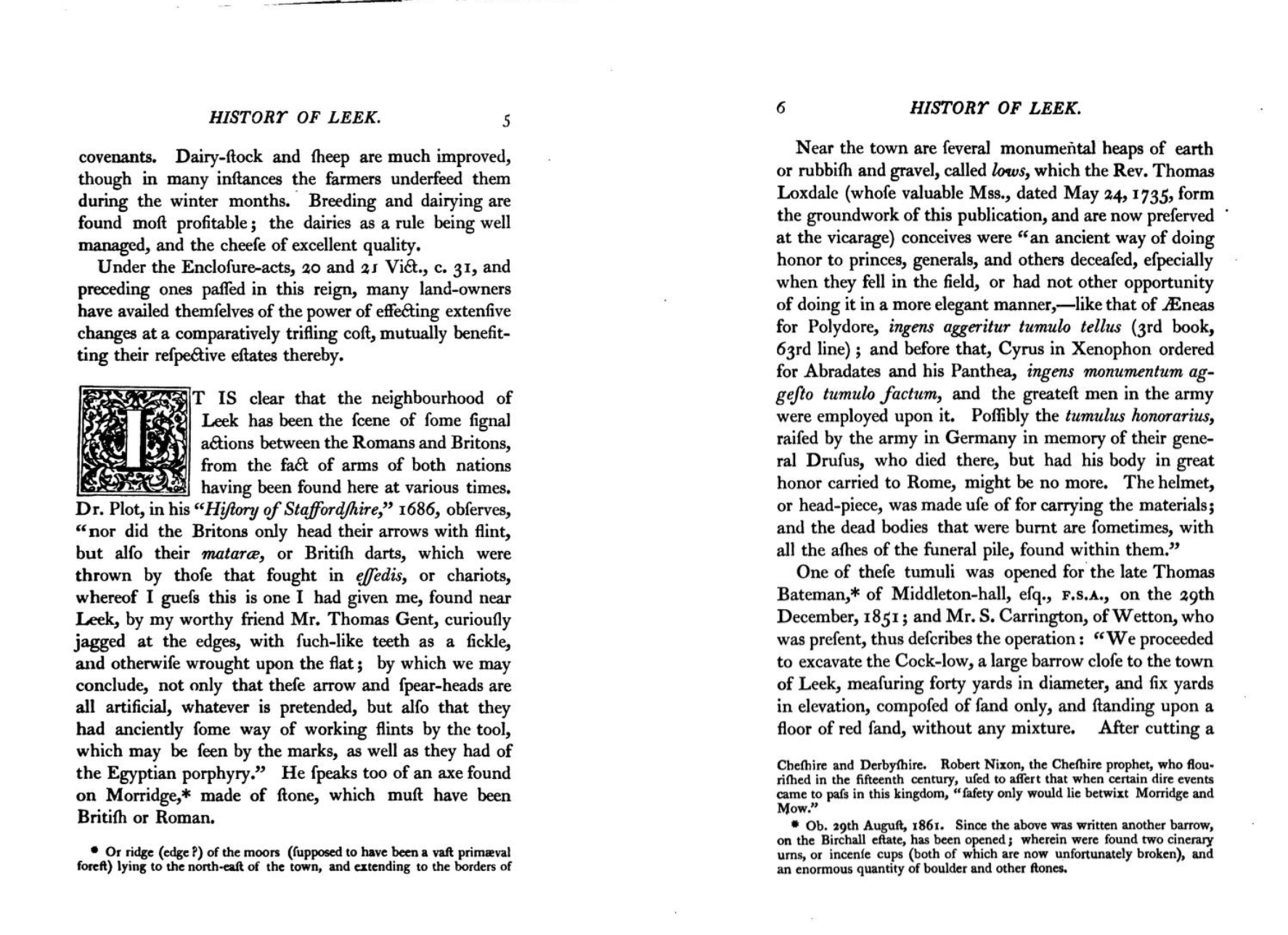
The story becomes even more fascinating when Cock Low is brought into it, because this large burial mound once stood in the Westwood area of Leek and reminds us that the town’s history reaches far beyond medieval documents and Victorian buildings. In his History of the Ancient Parish of Leek, published in 1862, local historian John Sleigh recorded that Cock Low was a substantial mound, around 40 yards in diameter and six yards high, which was excavated in the 19th century.
On 29 December 1851, cremated human bones were found there, along with pieces of a burial urn, and for many years the urn was kept at Leek Art Gallery in a room above the Public Library. Cock Low has since disappeared beneath later development, and it is thought to have stood near the present Spring Gardens area, but its recorded existence remains important because it places Leek within a much older landscape of burial, memory and ritual.
From Cock Low, the classic double sunset over The Cloud would not have been visible, but Kilburn’s research suggested something else. Around 4,500 years ago, the midsummer sun, viewed from Cock Low, would have set above a shallow depression in the horizon, just south of The Cloud and directly over the Bridestones, an even older Neolithic chambered tomb near Congleton.
Again, this cannot be treated as proof of intention, but it is exactly the kind of relationship between burial places, horizons and solar events that appears in other prehistoric landscapes. This is where the story of Leek becomes especially powerful, because the town is not just a place of buildings and streets, but part of a much older landscape where hills, burial places, churches, roads and stories have been layered over one another for thousands of years.
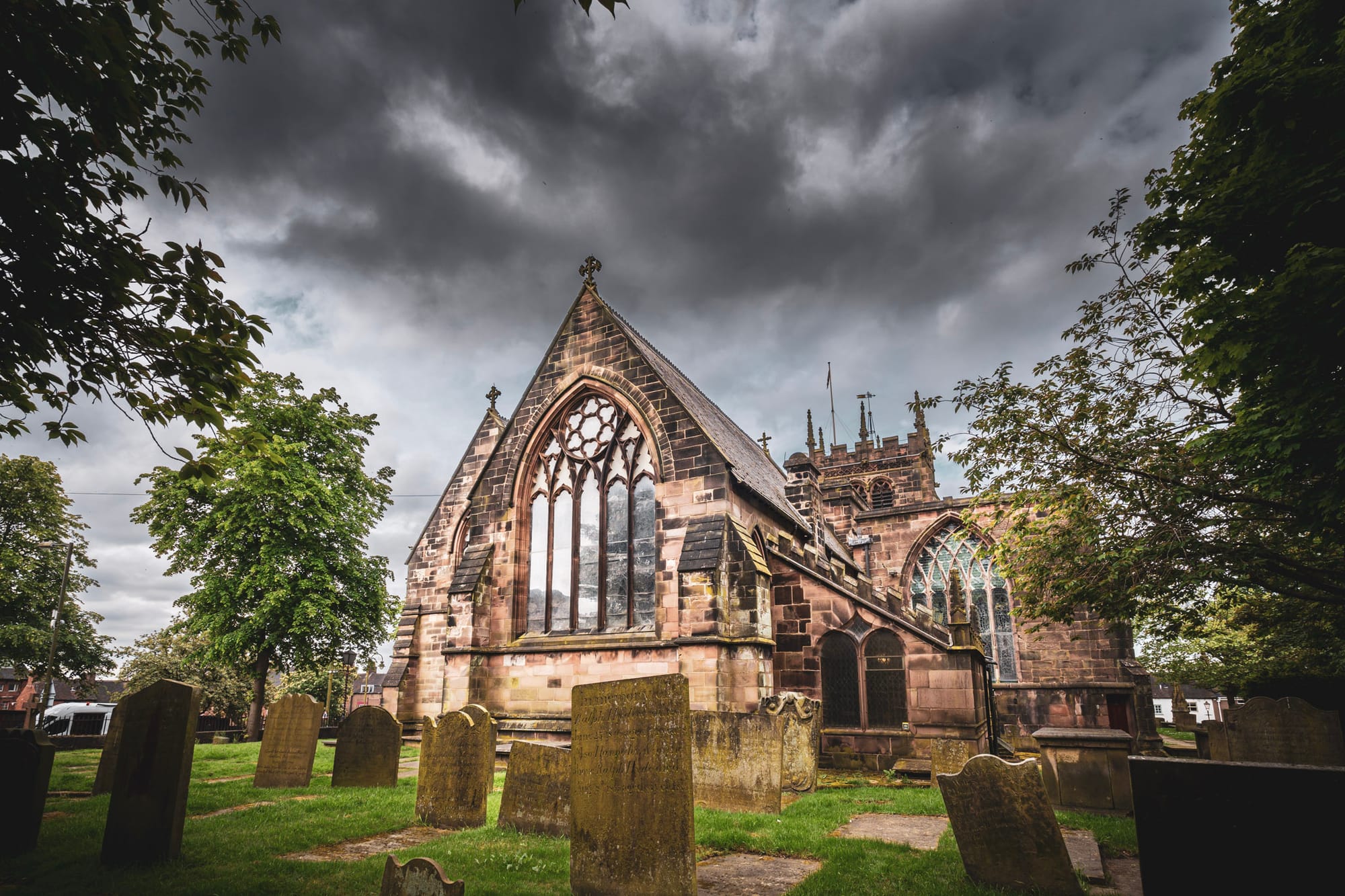
St Edward the Confessor and Leek’s medieval church
At the centre of the historic double sunset story is St Edward the Confessor’s Church, one of Leek’s most important historic buildings and a place that has shaped the identity of the town for centuries. The present church contains fabric dating back to the medieval period, with parts of the surviving building believed to date from the 13th and 14th centuries, although there are references to an earlier church on the site.
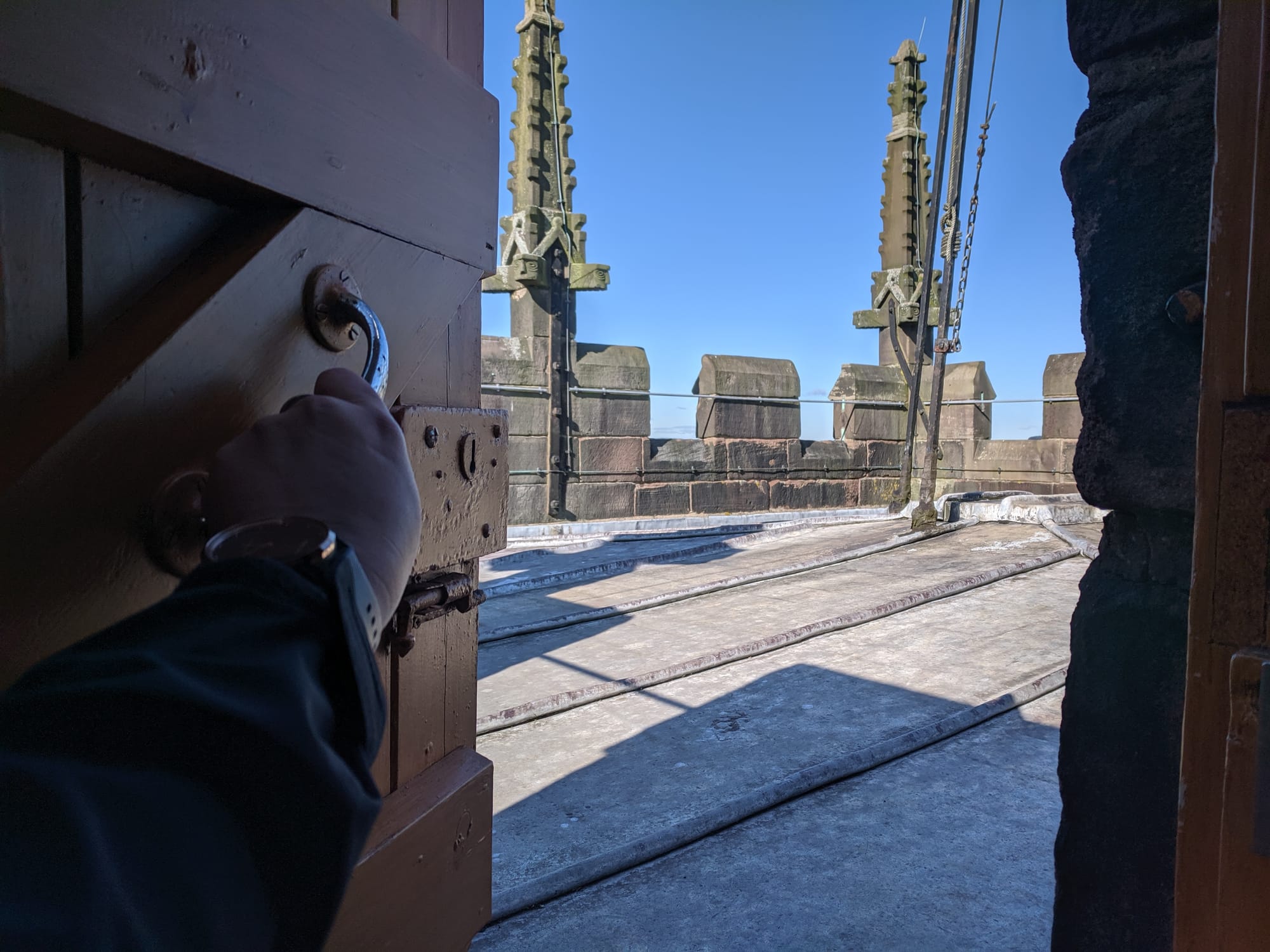
The original medieval building was altered and restored many times, as churches so often were, and St Edward’s carries the marks of different centuries in its fabric. The churchyard contains ancient crosses, the tower and windows preserve elements of earlier phases, and later restoration work added much of what visitors see today.
In the 19th century, the church underwent significant changes, including work associated with the architects Ewan Christian and George Edmund Street, both important figures in Victorian church restoration. This means that St Edward’s is not a building from one single moment in time, but a layered structure shaped by medieval worship, post-medieval repair, Victorian restoration and the needs of the community across generations.
When people once stood in the churchyard to watch the double sunset, they were not simply standing in a convenient viewing spot. They were standing in one of the most historically charged places in Leek, surrounded by stone, memory, worship and the long presence of the town itself.
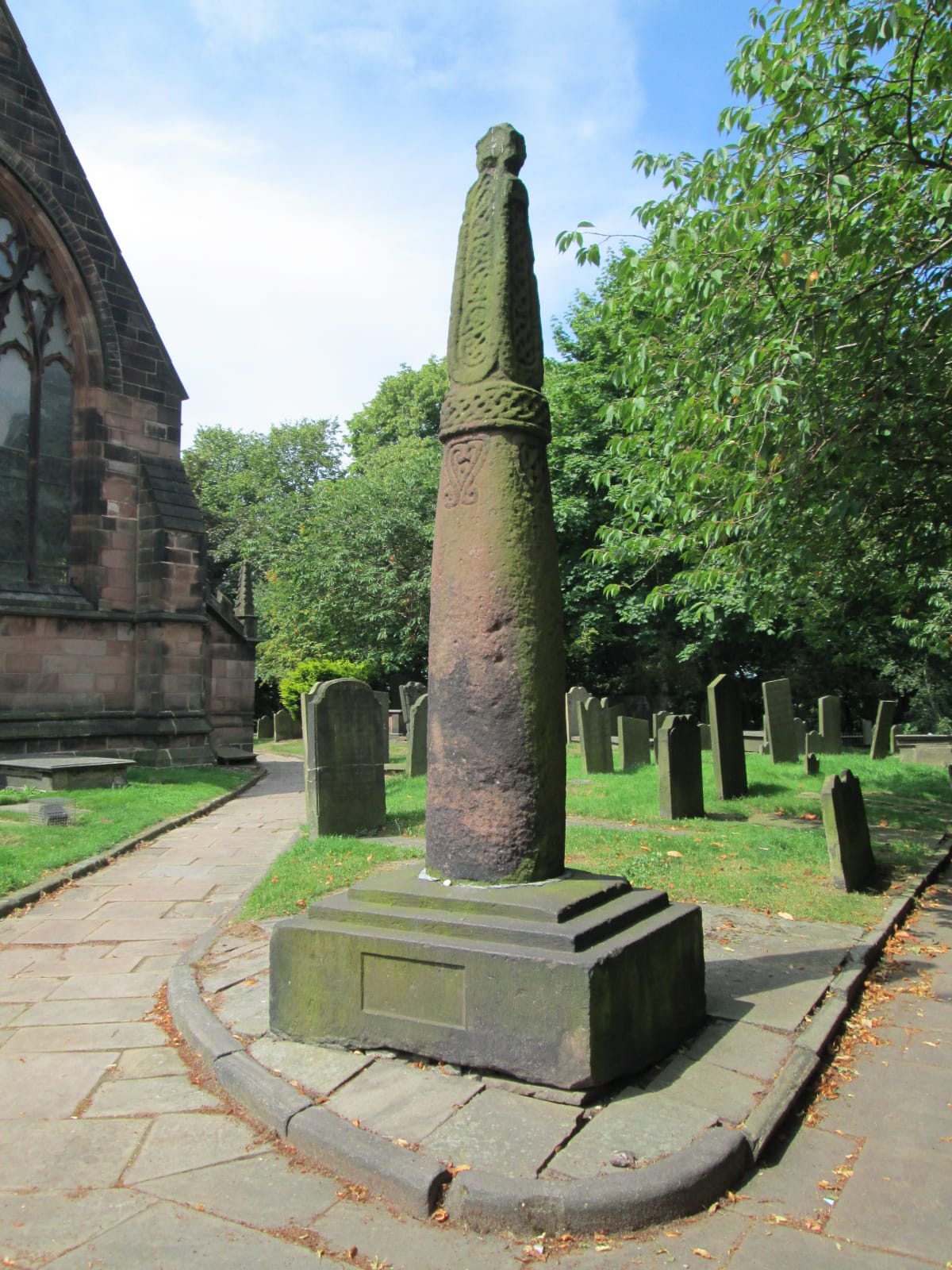
The crosses, the churchyard and the feeling of an older place
The churchyard at St Edward’s contains ancient stone crosses that add to the feeling that this has long been a site of memory and reverence. These crosses are important survivals, and they remind us that the Christian history of the churchyard reaches back far beyond the later restorations and additions that are easier to see today.
When the sun once set behind The Cloud and returned in the midsummer sky, seen from this old churchyard, it must have felt less like a simple astronomical event and more like the landscape itself was performing an ancient ritual. That does not mean we should abandon fact for folklore, but it does help explain why the story has survived for so long.
The hidden tunnels beneath St Edward’s
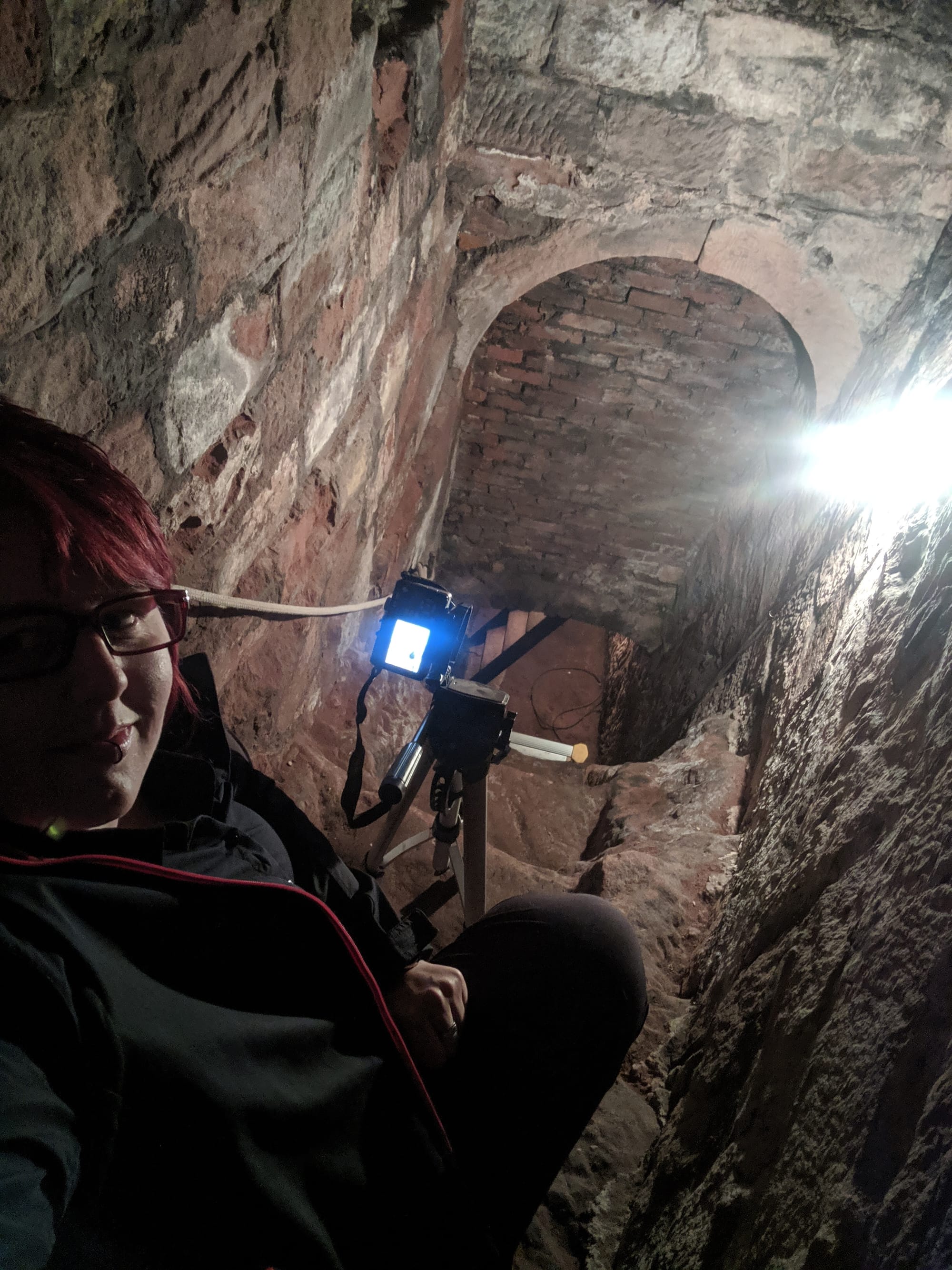
As if the double sunset, ancient crosses and possible prehistoric associations were not enough, St Edward’s also has another layer of mystery beneath the church itself. When a new central heating system was being installed, an entrance was discovered to a tunnel below the building, not simply in the undercroft, but deeper underground beneath the vestry and boiler room.
The discovery was made when Brian Hartley, the church’s Fabrics Officer, was clearing ashes and debris from the floor of the boiler room and came across a hole that had been filled in. Once opened, the hole led into a strange underground passageway that could be accessed by ladders, with steps, brickwork, stonework and blocked sections suggesting that the area beneath the church may be more complex than anyone had previously realised.
The tunnel is built from different materials, including brick and stone, while parts appear to be cut into the bedrock beneath the church. This suggests that it may have developed in different phases rather than being one neat planned structure. Some archways and steps lead nowhere because they have been blocked, while other sections appear to continue or hint at spaces that have not yet been fully investigated.
A local historian, Dr Cleverdon, was reportedly asked to examine the tunnel and dated it to the 18th century, when burial vaults were still being used, which gives the most likely practical explanation for at least part of the underground structure. Even so, the tunnel still feels mysterious, especially because the far end contains circular steps that would once have emerged outside the church, but later extensions to the building mean that this former exit is now capped beneath the altar area.
This is the kind of discovery that immediately captures the imagination, because it places you beneath a medieval church, surrounded by blocked routes, old stone, hidden levels and the sense that the building above is only part of the story.
The names carved in the tunnel
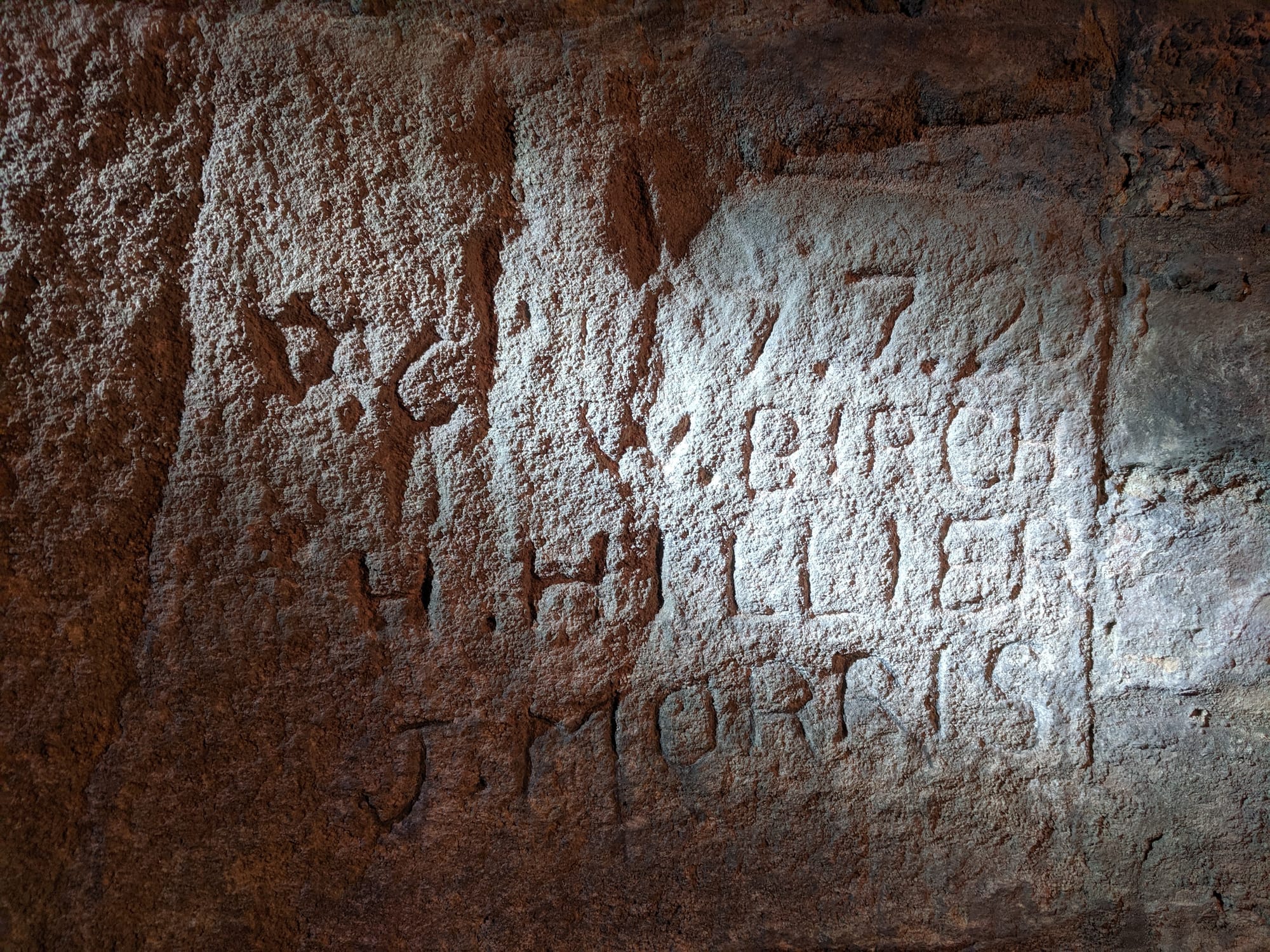
One of the most human details in the tunnel is the old graffiti carved into the stonework. The names W. Birch, J. Morris and H. Hillier appear with the date 1720, which proves that people were down there in the early 18th century, even if it does not necessarily prove when the tunnel was first created.
It is a small detail, but a powerful one, because local history is often at its strongest when it brings us face to face with ordinary people who left behind just enough of a trace to make us wonder who they were and what they were doing there. They may have been workmen connected with the burial vaults, repairs or alterations to the church, or they may simply have been people who found themselves in the underground passage and decided to mark their names into the stone.
We may never know the answer, but the names matter because they turn an architectural mystery into something personal. Somewhere beneath St Edward’s, more than 300 years ago, W. Birch, J. Morris and H. Hillier left their mark, and all these years later their names still invite questions.

St. Edward's Church, LeekThe Parish Church of St. Edward the Confessor is Leek's only medieval church, dedicated to Edward, King of England between 1042-1066. The original Norman church was burnt down in 1297, and re-built in ...View Full Resource on Staffordshire Past Track
Roaring Meg, Gun Hill and the offset clock
St Edward’s is also surrounded by local legends, including the story that the offset clock on the tower conceals damage caused by Oliver Cromwell’s cannon, known as Roaring Meg, which was supposedly fired from Gun Hill. Like many Civil War stories attached to old buildings, this should be treated as legend unless supported by firm evidence, but folklore has its own value because it shows how people have understood and explained the buildings around them.
A church as old and prominent as St Edward’s almost invites stories, especially when it stands above the town, contains ancient crosses, has tunnels beneath it and is connected with one of Staffordshire’s strangest natural phenomena. The important thing is to separate what can be proved from what can be enjoyed as tradition, while still recognising that folklore is part of how communities remember places.
Why the double sunset was visible from St Edward’s
The reason the double sunset was historically visible from St Edward’s churchyard is that the site gave a clear line of sight towards The Cloud at exactly the right angle for the midsummer sun. Around the summer solstice, the sun sets far to the north west, and from the old churchyard position it would once have appeared to sink behind The Cloud before reappearing from behind the side of the hill and setting again.
Although the churchyard of St Edward’s was the famous historic viewing point, the double sunset is now much harder to see from there because trees have grown up and obscured the old line of sight towards The Cloud. There have been times when trimming allowed the view to be opened again, but as things stand today, people wanting to watch the double sunset usually use alternative viewing places around Leek and the surrounding countryside.
The double sunset on Leek’s coat of arms
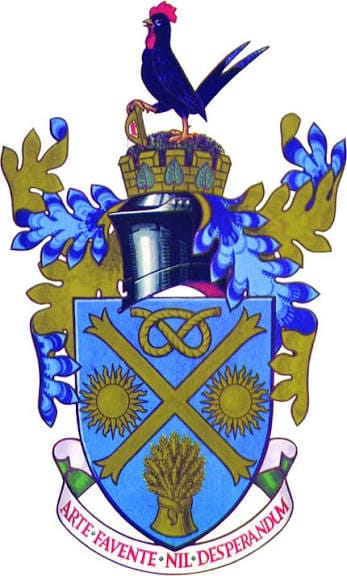
One of the clearest signs of how important the double sunset is to Leek can be found on the town’s coat of arms. Leek’s coat of arms is made up of a saltire shield, with the Stafford knot at the top, the Leek Double Sunset shown on either side, and a gold garb beneath.
Above the shield is a crest with a mural crown, three mulberry leaves on a mount of heather, and a moorcock resting its claw on a small weave shuttle. Every part of this design says something about the town and its identity, because the Stafford knot connects Leek to the wider county, the gold garb reflects agriculture, the mulberry leaves and shuttle point towards the town’s textile and silk history, while the heather and moorcock speak of the moorland landscape.
The double sunset sits there as one of the defining symbols of the town, not as a decorative extra, but as a civic emblem. The motto is Arte favente nil desperandum, which translates as “Our skill assisting us, we have no cause for despair.” It is a fitting motto for Leek, a town shaped by craft, industry, landscape and resilience.
Watching the Leek Double Sunset in 2026
The Leek Double Sunset is expected around the summer solstice, with Sunday, 21 June 2026 being the main date for people hoping to see it. As with all sunset watching, especially when the event depends on a low horizon, there are no guarantees, and even a small bank of cloud in the wrong place can hide the whole thing.
Anyone planning to watch should arrive early, choose a safe and legal place to stand, take care around roads and lanes, and remember that many of the best views are from rural or semi-rural places where residents, livestock and other visitors need to be respected. The Ramblers have listed a Double Sunset, Leek, Summer Solstice walk for Sunday, 21 June 2026, starting at 9pm, with an easy route of around 3.1 miles, or 5km, which may be a good option for anyone who wants to experience the evening as part of an organised walk.
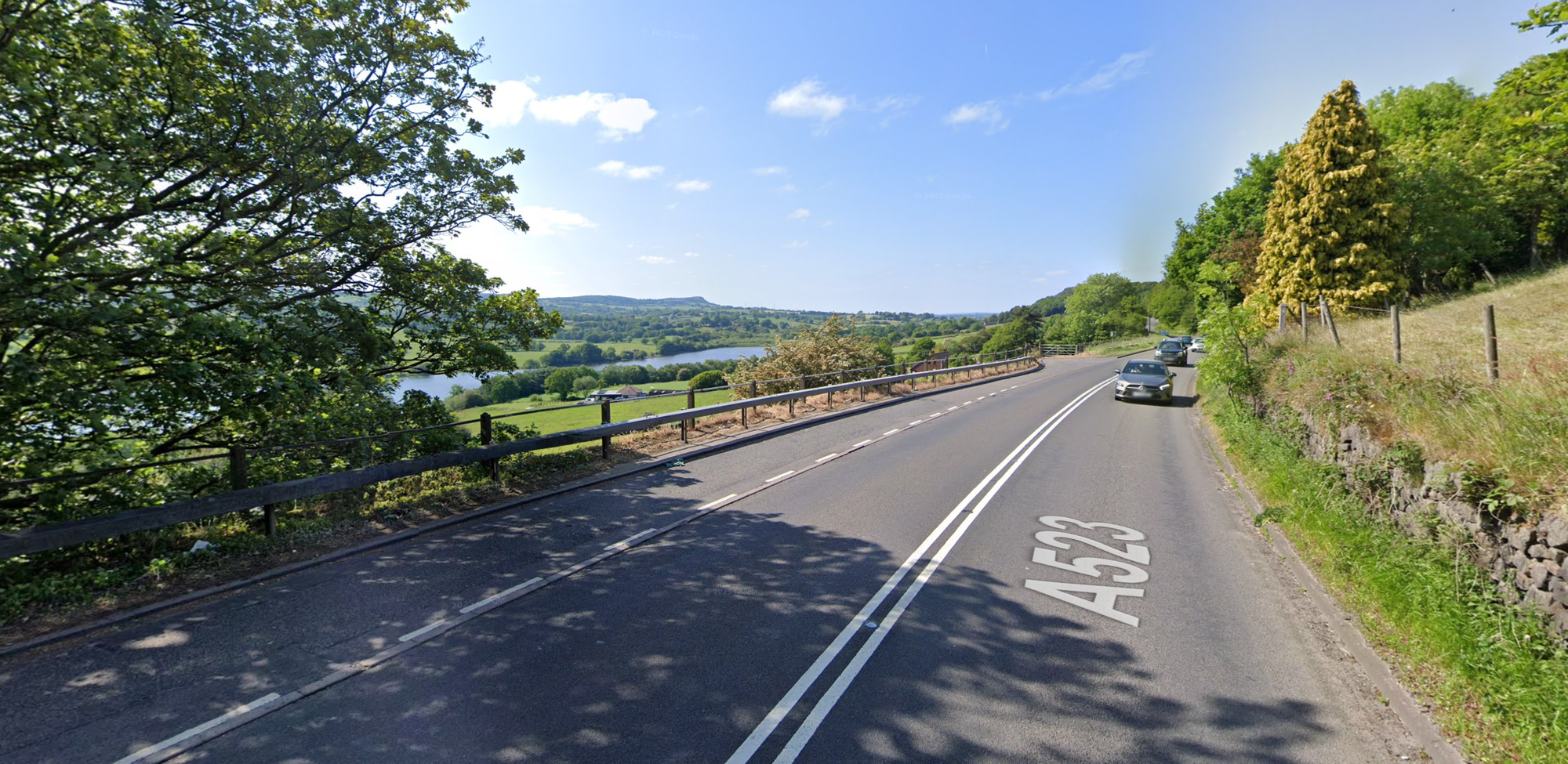
One of the best-known modern viewing points is the layby on the A523 above Rudyard Lake, which offers a clearer view towards The Cloud than the old churchyard view and has become a popular place for local observers. Lowe Hill, on the edge of Leek, is another traditional alternative, and its name is interesting in itself because of the wider use of “low” in the Moorlands for ancient mounds and elevated places.
The road towards Pickwood Hall, off Milltown Way, has also been associated with modern viewing of the double sunset, although anyone going there should be careful not to block lanes, gates or private access. Woodhouse Green is another place that has been noted as offering a good line of sight because it is closer to The Cloud, although the exact view again depends on where a person stands and whether the horizon is clear.
There is also a related double sunset experience from Glutton Bridge, looking towards Chrome Hill near Earl Sterndale and Longnor, where the sun appears to disappear behind the summit, reappear from the side of the escarpment and then set again behind higher ground. That Chrome Hill view is not the original Leek churchyard alignment with The Cloud.
Why the Leek Double Sunset still matters
The Leek Double Sunset matters because it is one of those rare local stories where natural history, astronomy, archaeology, folklore, civic identity and lived community memory all meet in one place. It connects Leek to Robert Plot in 1686, to Kevin Kilburn’s modern astronomical research, to the medieval church of St Edward the Confessor, to the lost mound of Cock Low, to the Bridestones, to The Cloud, to hidden tunnels, to old names carved into stone and to the coat of arms that still represents the town.
It also reminds us that local history is not always hidden in archives, sealed behind museum glass or preserved only in listed buildings. It can be found on the horizon, in the way a hill catches the light, and in a churchyard where people have stood for centuries looking out towards the same piece of sky.
Leek’s double sunset is not just a strange thing that happens once a year. It is a reminder that the Staffordshire Moorlands is a landscape full of meaning, where natural features and human history have been speaking to one another for thousands of years.
On Sunday, 21 June 2026, if the weather is kind, people will once again stand around Leek and look towards The Cloud. They will watch the sun sink behind the hill, wait in the fading light and hope to see it return. If it does, they will be witnessing something that has fascinated people for centuries, something recorded in the 1600s, studied by astronomers, written into the symbolism of the town and still powerful enough to draw people out into the landscape on a midsummer evening.
For a few minutes, the past and present will meet on the horizon, and the sun will set twice over Leek.
 Jenna Goodwin