Staffordshire Craftsmanship Beneath Westminster: The Minton Tiles of St Stephen’s Hall
Encaustic tiles produced by Mintons of Stoke-on-Trent form the striking floor of St Stephen’s Hall in the Palace of Westminster, a lasting example of Staffordshire craftsmanship embedded in one of Britain’s most historic buildings.

Last week, I was in London representing Staffordshire with The Staffordshire Signal at the Palace of Westminster for the 10th anniversary of Staffordshire Day, as part of a wider Staffordshire showcase alongside We Are Staffordshire.
It was one of those moments that makes you stop and take it in. Not just the scale of the building, but what it represents, politically, historically, nationally.
But as always, I found myself drawn to something a little closer to home.
While I was there, I made a point of exploring the links between London and Staffordshire. The connections that are often overlooked, but quietly built into some of the country’s most important places.
And in St Stephen’s Hall, there is one of the most striking examples of all.

A building shaped by history
St Stephen’s Hall stands on the site of the old medieval chapel of St Stephen, originally constructed in the late 13th century, around 1292, during the reign of Edward I. By the 16th century, the chapel had been repurposed as the chamber of the House of Commons, a role it continued to serve for over 300 years.
It is a space layered with history, long before the building we see today existed.
The current Palace of Westminster is the result of the Burning of the Houses of Parliament in 1834, a catastrophic fire that destroyed most of the medieval complex, including the old Commons chamber.
What followed was not simply a rebuild, but a complete reimagining of what this building should be.
In 1836, architect Charles Barry was appointed to lead the design of the new Palace, working in the Gothic Revival style. He was joined by Augustus Pugin, whose expertise in medieval design shaped much of the interior detail. Pugin was a passionate advocate for authenticity in architecture, insisting that decoration should be meaningful, functional, and rooted in traditional craftsmanship.
That thinking led directly to the floor beneath our feet.
From Westminster Hall to St Stephen’s Hall
Most visitors entering Parliament are naturally drawn to Westminster Hall first, and understandably so.
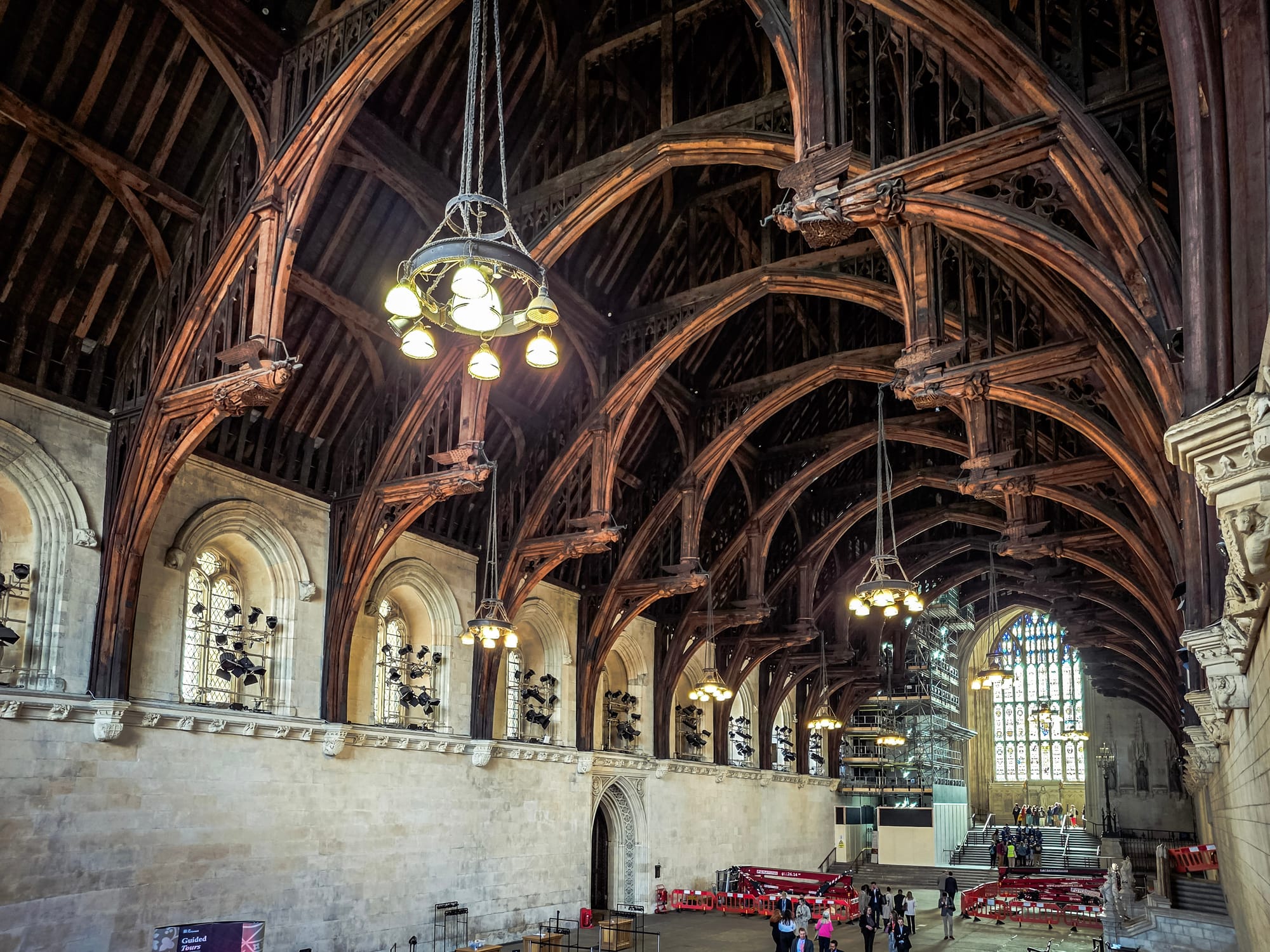
Built in 1097 under William II, the son of William the Conqueror, Westminster Hall is one of the oldest surviving parts of the Palace of Westminster. Its great hammer-beam roof, added in the late 14th century during the reign of Richard II, is one of the most remarkable medieval timber roofs in Europe.
It is the part of Parliament people often recognise. It has witnessed royal banquets, state trials, lying-in-state ceremonies, and some of the most significant moments in British public life.
But walk through Westminster Hall and into St Stephen’s Hall, and the story shifts.
The scale and age of Westminster Hall are impossible to ignore, but just beyond it is something quieter, something Staffordshire can claim as its own.
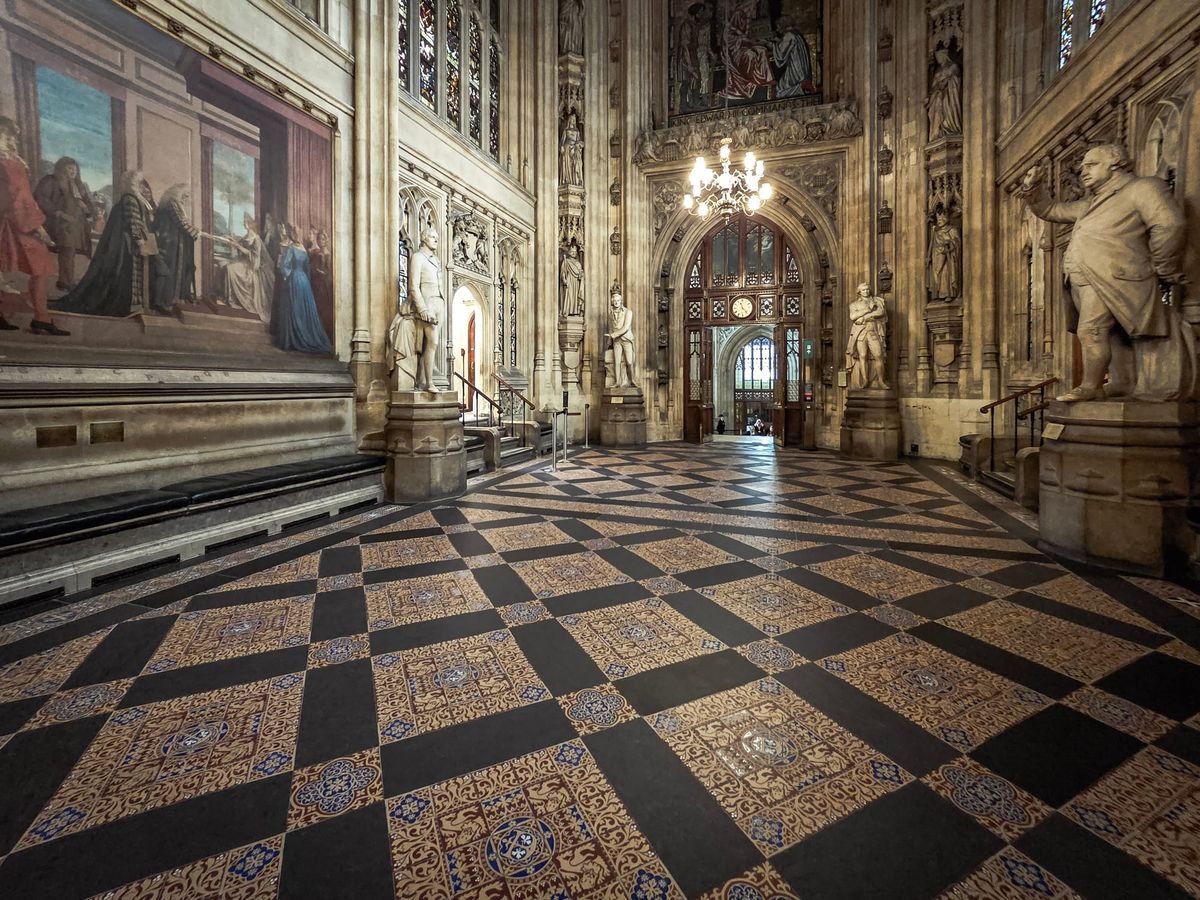
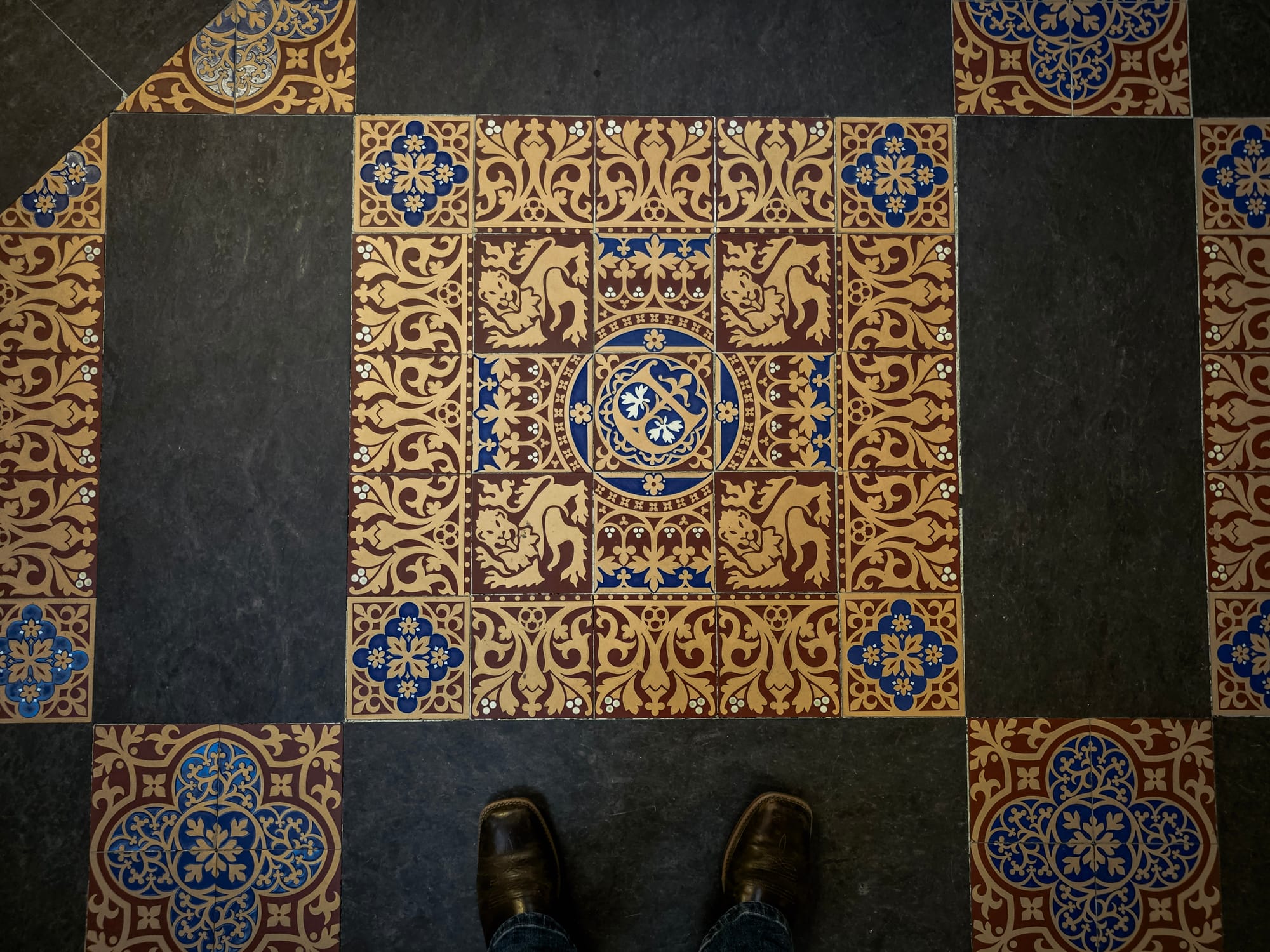
Beneath your feet, in St Stephen’s Hall, is a tangible link to Stoke-on-Trent. Not a symbol, not a vague connection, but real Staffordshire craftsmanship, made in the Potteries and built into the heart of Parliament.
The Potteries in the heart of Parliament
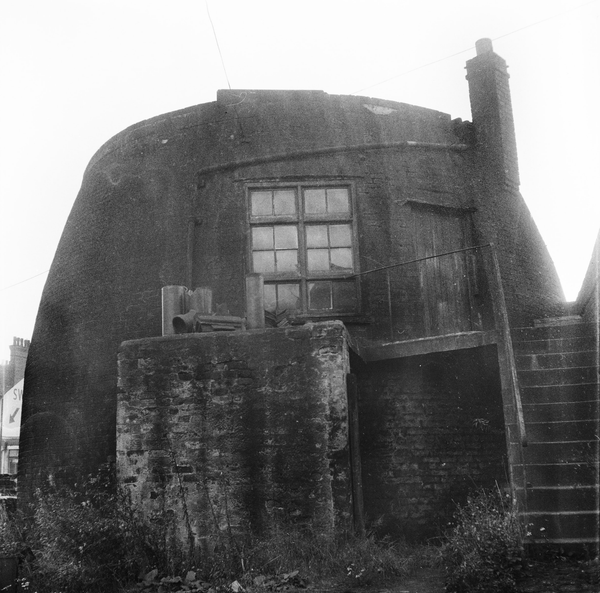
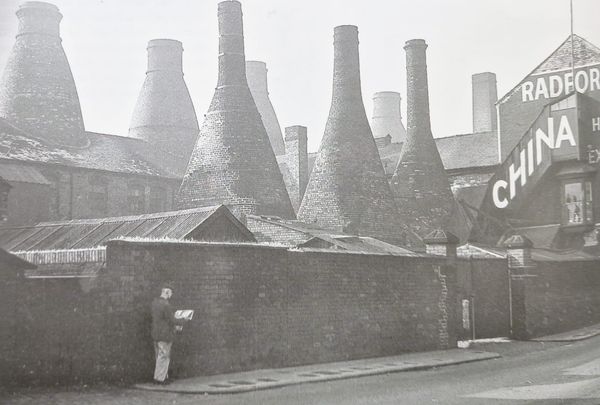
The tiles that define St Stephen’s Hall were produced by Mintons, one of the most important names in the history of Stoke-on-Trent.
Founded in 1793 by Thomas Minton, the company quickly rose to prominence during the late 18th and early 19th centuries, at a time when the Potteries were becoming a global centre for ceramic production.
By the 1840s, under the leadership of Herbert Minton, the company had become a leader in innovation, particularly in the revival of encaustic tiles, a technique that had largely disappeared since the medieval period.
It was Augustus Pugin who played a key role in this revival. In the early 1840s, he worked closely with Mintons to recreate the richly patterned floors of medieval churches and cathedrals, helping to reintroduce encaustic tiles to Victorian Britain.
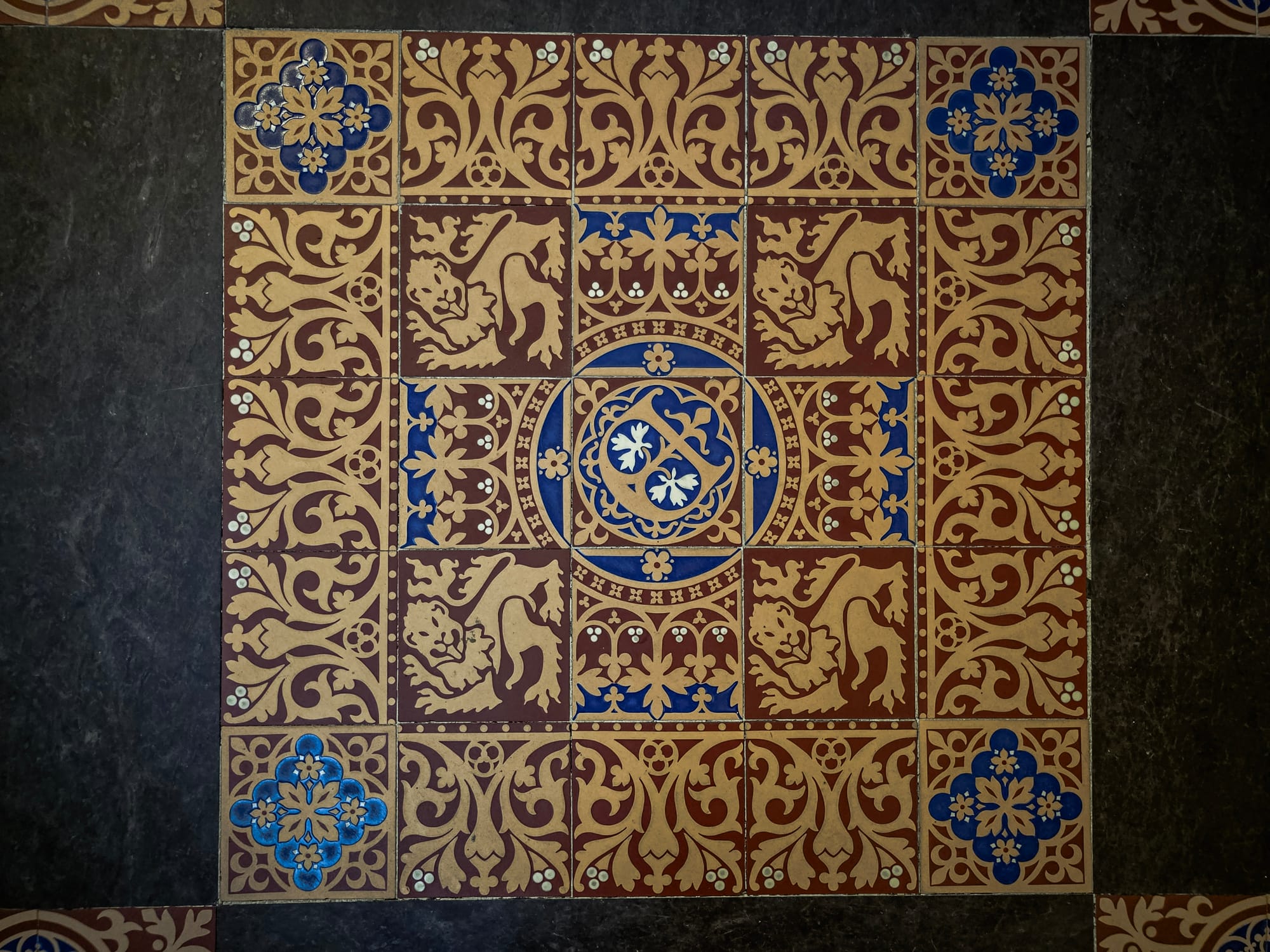
Rather than being painted on, the patterns in these tiles are created by inlaying coloured clays into the body of the tile before firing. The design is part of the material itself.
That is why they have lasted.
The encaustic tiles used in the Palace of Westminster were installed during the main phase of construction between the 1840s and 1860s, as the new building gradually took shape.
Nearly two centuries on, despite constant footfall from visitors, politicians, and staff, the tiles in St Stephen’s Hall remain remarkably clear and intact. They were designed to endure, and they have.
Design with purpose
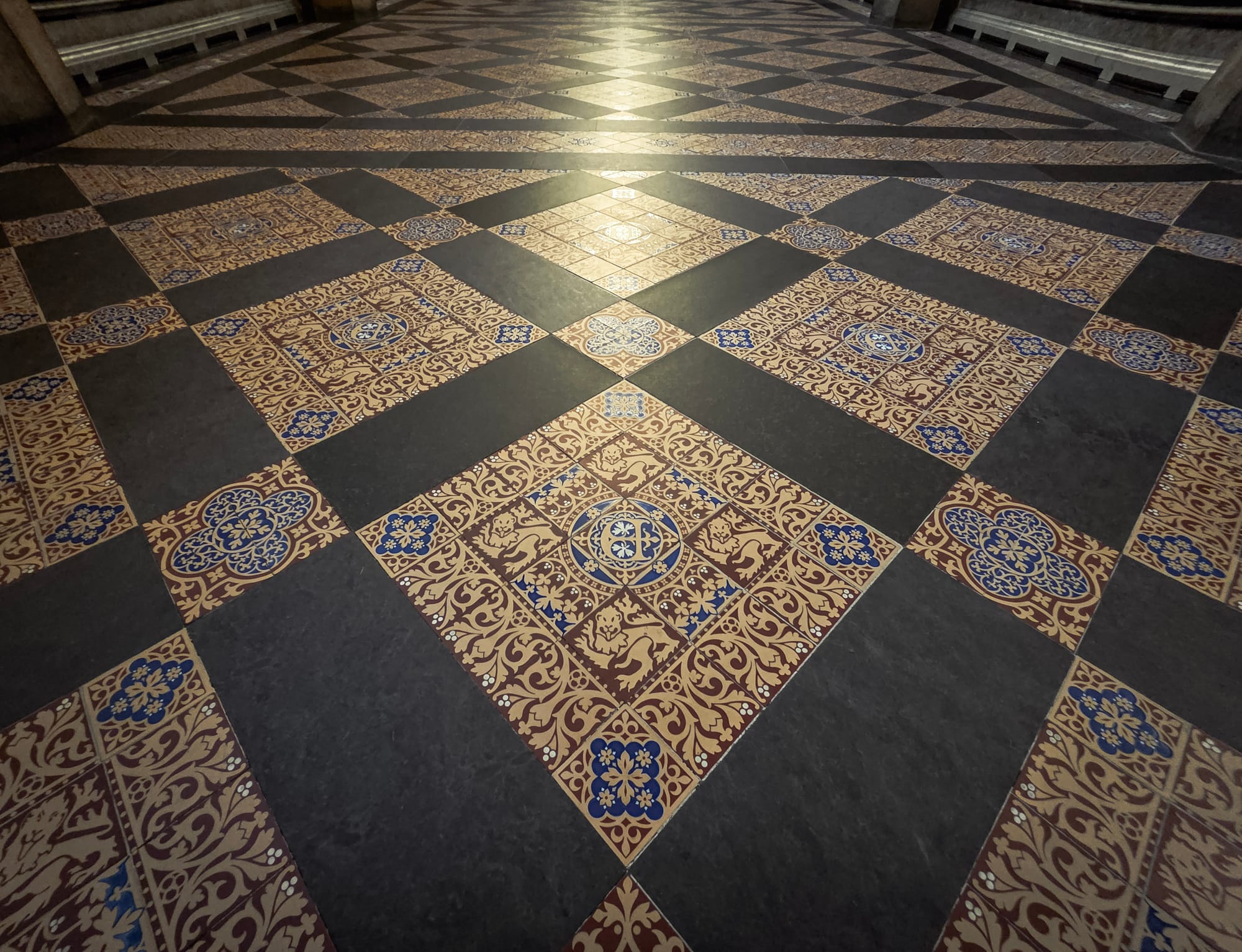
The floor itself is not random decoration. It is a carefully considered design, built around geometric patterns and references to heraldic tradition, reflecting the wider Gothic style of the building.
Many of the motifs draw inspiration from medieval English design, reinforcing the idea that this was not just a new building, but one that connected the present to the past.
In the 19th century, architecture was used to communicate meaning. In a building like this, everything had a purpose.
The tiles from Stoke-on-Trent helped reinforce that sense of continuity and permanence. They were practical, durable, and visually striking, all at the same time.
A quiet connection to home
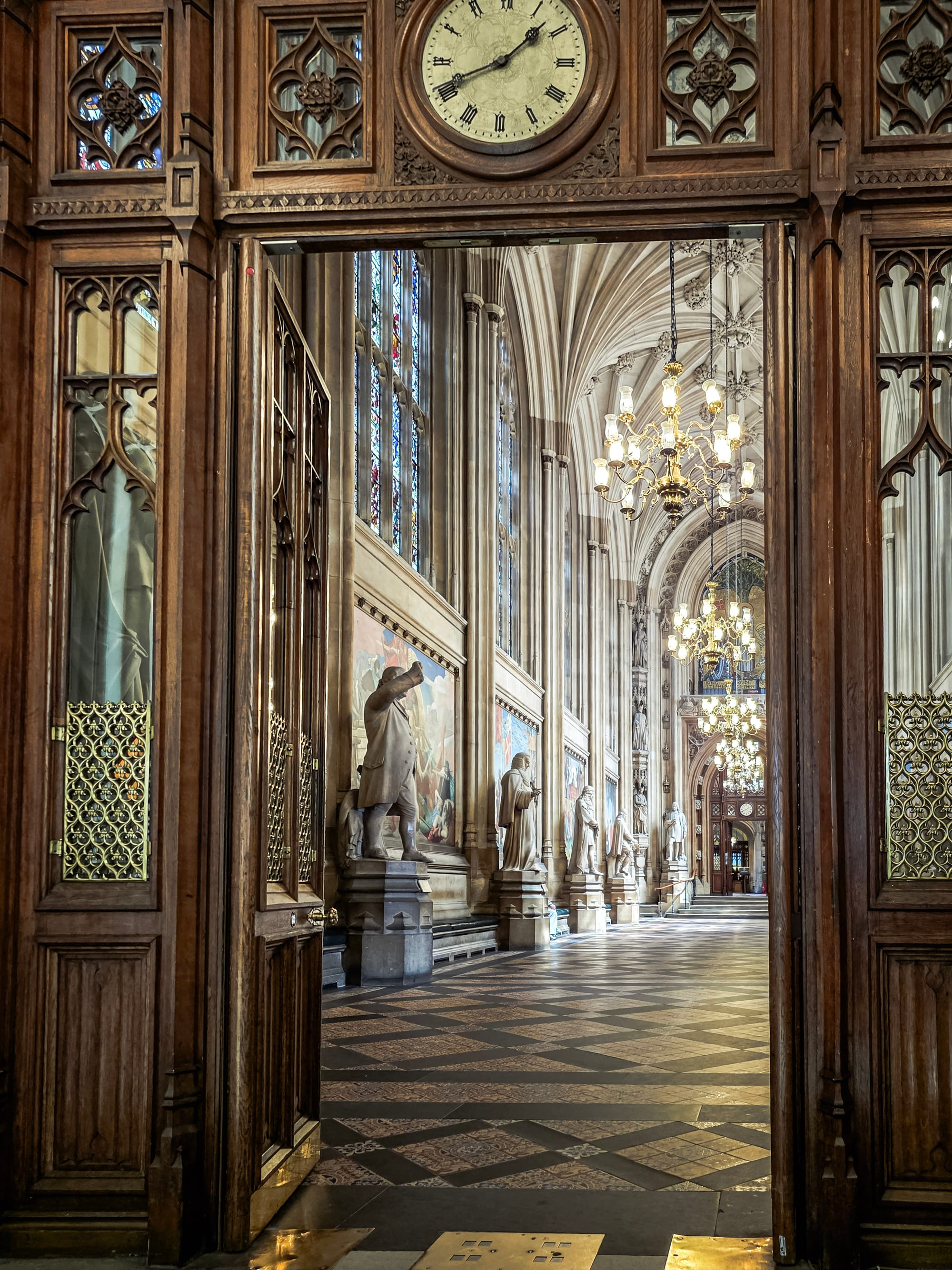
Standing there, surrounded by one of the most recognisable political buildings in the country, it is easy to overlook details like the floor.
But once you know, you cannot unsee it. This is Staffordshire craftsmanship, right at the centre of British political life.
During the 19th century, the Potteries supplied ceramics across Britain and far beyond, exporting to Europe, America, and even the expanding markets of the British Empire. Churches, railway stations, civic buildings, and grand homes were all shaped by the same skills and materials that came out of Stoke-on-Trent.
The commission for the Palace of Westminster was not just another project. It was recognition of that expertise at the highest level, placing the work of Staffordshire craftsmen at the heart of the nation’s most important building.

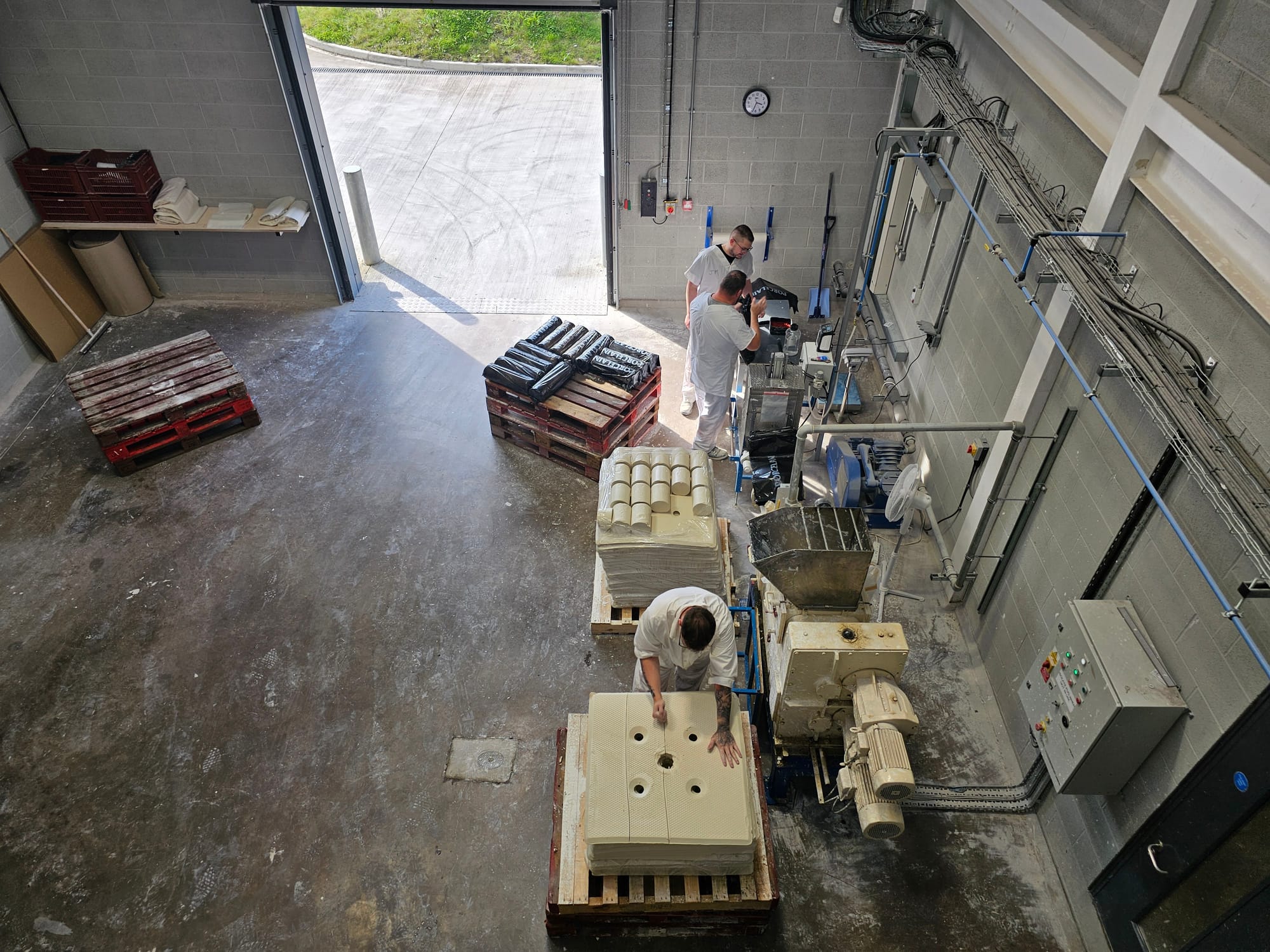

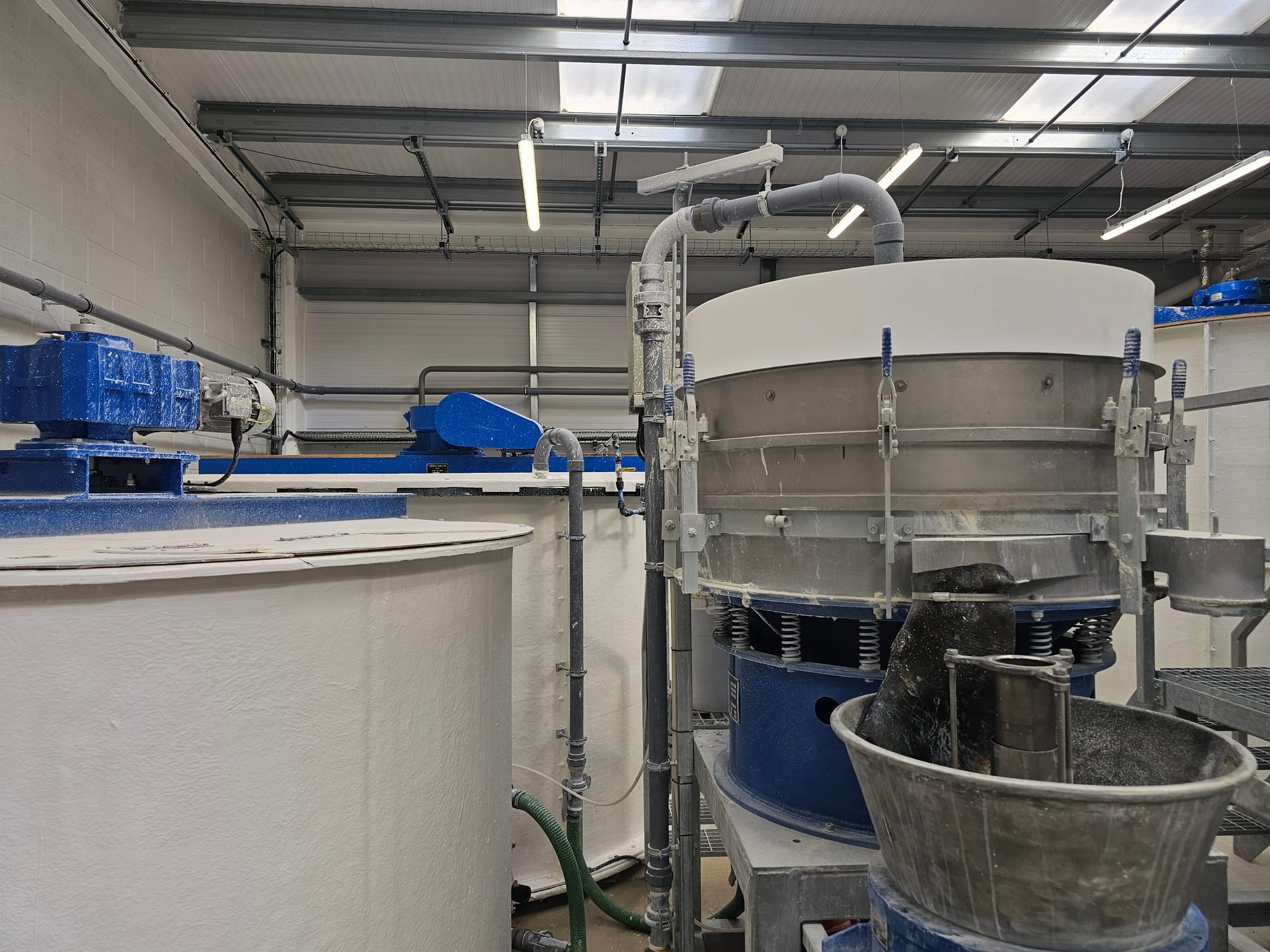
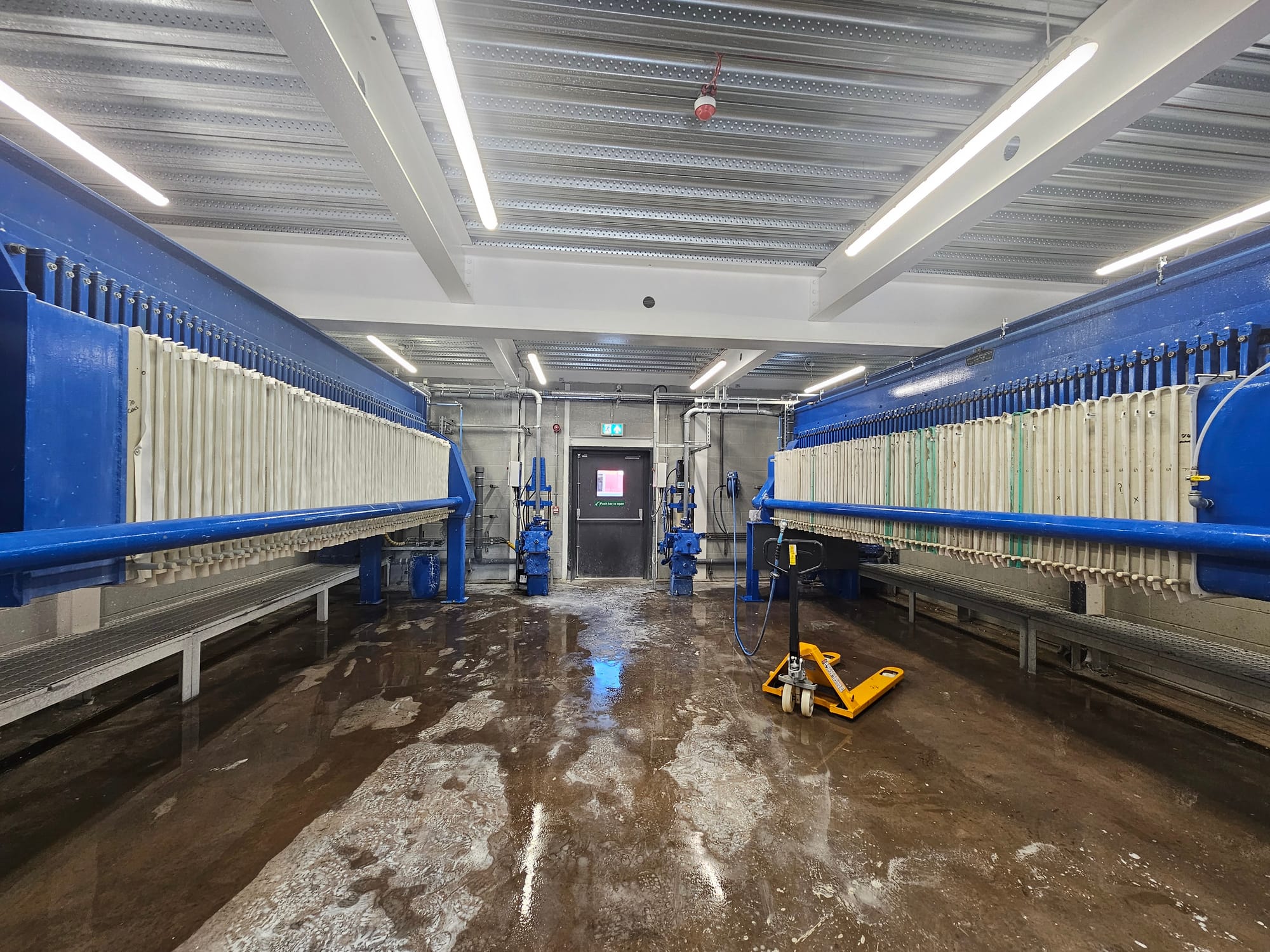
Valentine Clays, Fenton
Restoring history with Staffordshire clay
While many of the original Minton tiles have survived since the 19th century, parts of the floor have required careful restoration over time.
When repairs have been needed, the connection to Staffordshire has continued.
Clay supplied by Valentine Clays, a long-established company based in the Potteries, has been used in the process of recreating and restoring encaustic tiles for historic projects, including work connected to sites like the Palace of Westminster.
This is not simply a case of patching or replacing damaged areas. Restoration work of this kind requires an understanding of the original materials, the firing processes, and the traditional techniques used in the 19th century.
The clay itself matters.
Matching the composition, colour, and behaviour of the original material is essential to ensure that any restored tiles sit seamlessly alongside those produced by Mintons nearly two centuries ago. It is a quiet continuation of the same story.
From the original tiles made in Stoke-on-Trent in the 1840s, to modern restoration work supported by Staffordshire materials, the Potteries remain part of the fabric of the Palace of Westminster. Not just historically, but today.

More to come
This is just one of many connections between Staffordshire and London that I explored during the visit.
From industry to architecture, from materials to craftsmanship, the links are everywhere once you start looking for them.
So follow along, because this is only the beginning.
Because sometimes, the biggest stories from home are not the ones on display.
They are the ones quietly built into the places you would least expect.
And in St Stephen’s Hall, that story is still there, right beneath your feet.
Thank you for reading.
If you enjoy this work and would like to help support it, you can sign up for my newsletter so you don't miss anything, and find my Amazon Wish List here;