The Rise of Fascism in Stoke-on-Trent
The language feels disturbingly familiar: a forgotten people, a broken system, and promises that only a strong leader can put things right. But this is not just a story about today. It is a warning from Stoke-on-Trent’s own past, when division, blame and extremism found a foothold in the Potteries.

The rhetoric is hauntingly familiar. You hear it in the local pubs, scrolling through social media feeds, and on the screens of biased news channels. It speaks of a forgotten people, of traditional industries gutted by global interests, and of a nation that needs to be restored to its former glory. It promises that a single leader can bypass the stagnation of the 'Old Gang' and finally get things done for the working man.
But while the faces on the campaign posters change, the playbook remains a century old. Before the modern surge of populist anger, Stoke-on-Trent was the primary testing ground for a dangerous movement that promised salvation while delivering only division. During the 1930s, fascism found a foothold in the Potteries by exploiting the very same economic despair and social discontent we see mirrored today.
Mosley’s Bloodline and Staffordshire Roots
To understand why this ideology took root here, one must look at the man who considered this soil his birthright. Sir Oswald Mosley was no outsider. Born in 1896 , he was the heir to a Staffordshire baronetcy with ancestral roots reaching back to the 12th century. His family were once the Lords of the Manor of Manchester, but their heart lay in the grand halls of North Staffordshire.

Rolleston HallA lantern slide view of Rolleston Hall, home of the Moseley family. Pictured in front is the state coach with servants and horses in full livery. Sir Oswald Mosley, 4th Baronet (1848-1915), was a Justiice ...View Full Resource on Staffordshire Past Track
Oswald spent much of his childhood at Apedale Hall , a grand Elizabethan-style manor near Newcastle-under-Lyme, and at his grandfather’s estate, Rolleston Hall in Rolleston on Dove. These were lands built on the very industries that defined the region: coal, ceramics, and iron. When these industries later began to buckle under global economic pressure, the resulting collapse left local workers disillusioned and desperate for a saviour.
Mosley was raised in an atmosphere of immense privilege and volatile tempers. His father was a notorious womaniser and a bully, and after his parents separated, Oswald was spoilt by a mother who fuelled his belief in his own destiny. During the First World War, he served with the 16th Lancers in the trenches and later as a pilot in the Royal Flying Corps. He was eventually invalided out of the war in 1916 due to a permanent leg injury sustained in a flying accident.
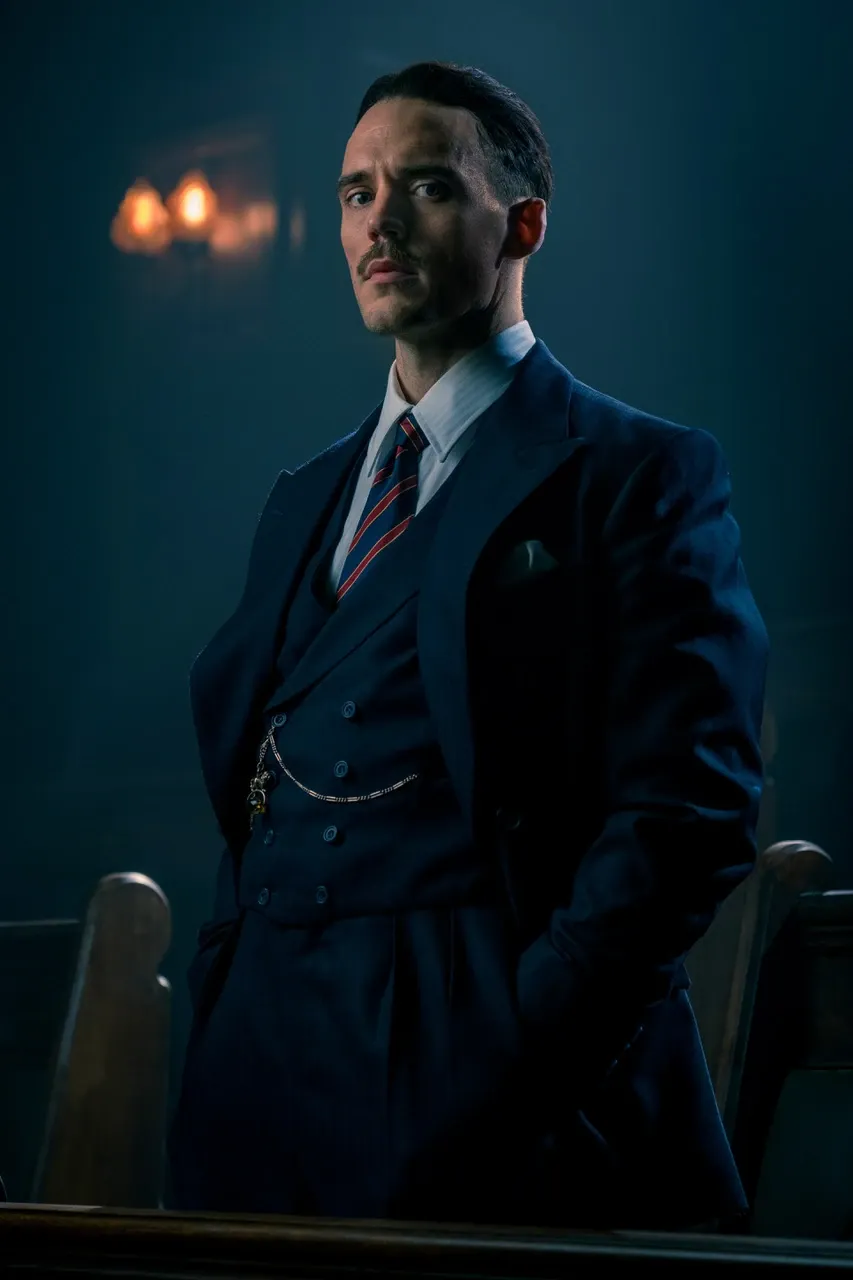
He emerged from the conflict with a permanent limp and a hardened conviction that politics should be handled with military-like efficiency. This is the version of Mosley many will recognise today from the hit BBC series Peaky Blinders, where he is portrayed by Sam Claflin as the chilling, calculating antagonist to Tommy Shelby. While the show takes creative liberties, it captures the essence of the real-life Mosley: the sharp-dressed, silver-tongued aristocrat who used his high-society charisma to mask a deeply authoritarian agenda. To Mosley, power was something to be taken through discipline, force, and the total suppression of dissent. This elitist, martial mindset formed the bedrock of his transition from a mainstream politician into a confirmed fascist by late 1931.
The Beloved MP: How Cynthia Opened the Door
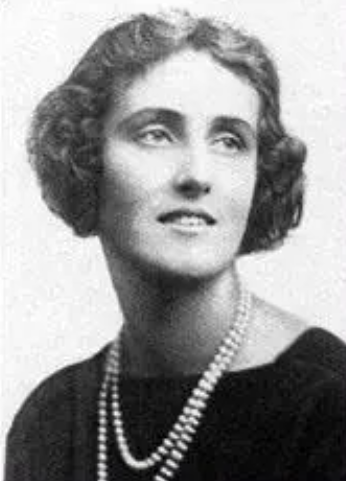
In 1925, the path for the Mosleys' entry into Stoke-on-Trent was paved not by Oswald, but by his first wife, Lady Cynthia "Cimmie" Mosley. The daughter of Lord Curzon, a former Viceroy of India, and his American wife Mary Victoria Leiter, Cimmie was an aristocrat who possessed a genuine common touch that Oswald notoriously lacked. She was everything he was not: emotional, warm, and transparently sincere.
When Cynthia accepted the offer from the Stoke-on-Trent Labour Party to stand for the Stoke Division, she did not evoke resentment for her immense wealth. Instead, she won the hearts of the working class by knocking on the doors of the city's poorest residents. Her popularity was solidified in the 1929 General Election, where she "romped" to victory against an incumbent Conservative who had attempted to spread false rumours about her wealth and duplicity. Doubling the Labour vote from 13,000 to 26,000, she achieved a massive majority of 7,850, recording one of the largest swings to Labour in the entire country.
The Mosleys instantly became the Potteries' pre-eminent political and society couple. While Oswald was busy with his own campaigns in Birmingham and Smethwick, Cynthia’s tireless work in Stoke-on-Trent created a deep seam of mass loyalty to the Mosley name. She served as the "guarantor" for Oswald's sincerity; her presence at his side during early local meetings, even while battling ill health, persuaded many uncertain minds to align themselves with his cause.
In 1931, when Cynthia felt political disillusionment and health concerns, she declined to seek re-election. Oswald stood in her place for his fledgling New Party, attempting to inherit her political seat. Despite only committing five days to campaigning in the city, he polled 10,534 votes and retained his deposit, a feat achieved in only one other constituency nationally, demonstrating that mass loyalty was tied to the man because of the esteem in which his wife was held.
Tragically, Cynthia died in London on 16 May 1933 following an operation for acute appendicitis and peritonitis. Her death triggered an outpouring of sympathy in Stoke that initially softened the attitude of many critics toward Oswald. However, it was this very well of loyalty, built on Cynthia’s genuine care for the potters and miners, that Oswald would later exploit as the foundation for his British Union of Fascists membership in the Potteries. Though she rarely publicly shared any sympathy with fascism, her legacy provided the "launch pad" for a movement that would eventually betray the very people she had championed.
The Scapegoat: A Playbook of Blame
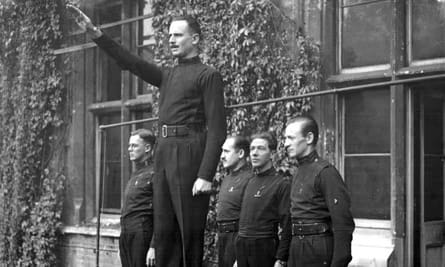
Fascism thrives on a simple, poisonous idea: your life is hard because of them. In the 1930s, as the pot banks struggled and the mines went quiet, Mosley turned his attention to a new enemy. He took the economic anxieties of the "low class", the potters, the miners, and those he deemed "uneducated", and redirected them towards a visible minority.
Back then, the target was the Jewish community. Mosley used his platform to spread "palingenetic ultranationalism", the idea that the nation was in a state of decay and could only be reborn through a "purification" of its people. He spoke of an "international conspiracy" and "alien influences" that were supposedly draining the lifeblood of British industry. He portrayed Jewish people as "un-British," claiming they could never truly integrate into our culture.
Today, if you change the names and the dates, the parallels are chilling. The same groups that now target those of a different faith or background use the exact same tactics. They claim that "certain people" are a primitive threat to our way of life, that they are "predatory," or that they are an "intolerant threat" seeking to take over the country. Just as Mosley blamed the Jewish community for "Moscow gold" and "sweat-shops," modern populist movements use social media and biased news to suggest that minorities are to blame for the decline of English culture, the lack of housing, or the strain on local resources. It is the same old lie: that if we could just get rid of the "others," the "real" British people would finally prosper.

Dr Parkes' house, LongtonThe front of Dr Parkes' house from Sheaf Passage. This property, possibly 84, Normacot Road, had been the local headquarters of the Blackshirts, a fascist organisation of the inter-war period.View Full Resource on Staffordshire Past Track
The Blackshirts: Discipline and Despair at 84 Normacot Road
In the heart of the working-class district of Longton, fascism found its physical home. Dr Alfred Parkes, a local physician, opened his surgery at 84 Normacot Road to the movement, allowing it to become the regional headquarters for the Blackshirts, the paramilitary wing of the British Union of Fascists (BUF). This was no ordinary surgery; even years later, the remnants of fascist posters reading "India Betrayal" remained visible on its walls.
The Blackshirts were not just a political club; they were an army in the making. Modelled after Mussolini’s "Squadristi" and Hitler's SS, they wore black uniforms to symbolise a military-like discipline that appealed to young men who felt the old ways of democracy had failed them. They recruited heavily by offering:
- A Sense of Belonging: To miners and potters who felt abandoned by the state, the BUF offered a uniform, a salute, and a sense of "physical fitness" and purpose through sessions led by their "Defence Force".
- The Youth Section: They even formed a section for local schoolboys, using football matches, lectures, and rambling clubs to indoctrinate the next generation into their "Britain First" ethos.
- Force as a Solution: Their creed was one of "action". They did not want to debate; they sought the violent suppression of dissent. If you disagreed with a Blackshirt, the response was often a fist or a "kosh", a weapon many were accused of carrying.
To Mosley, fascism was a "higher form" of civilisation that promised to solve the collapse of traditional industries like coal, ceramics, and steel. Locally, this meant:
- The Corporate State: Dissolving trade unions and placing all industries, including the struggling local pottery trade, under central government control.
- Extreme Nationalism: Summarised in the slogan "Britain First," it prioritised national identity over individual liberty.
- The Scapegoat: Blaming economic woes on immigrants, communists, and Jewish people, spreading conspiracy theories to redirect local anger.
The headquarters at Normacot Road was a hub of intense activity, hosting daily lectures, speaker training, and attendance logging. Members were under strict orders the moment they set foot on the doorstep, even being tasked with cleaning windows to maintain an image of discipline. Outside, they engaged in "propaganda walks" and distributed leaflets through the six towns, their boots echoing on the cobbles of Longton and Hanley as they looked for anyone they could convince that their neighbour was their enemy.
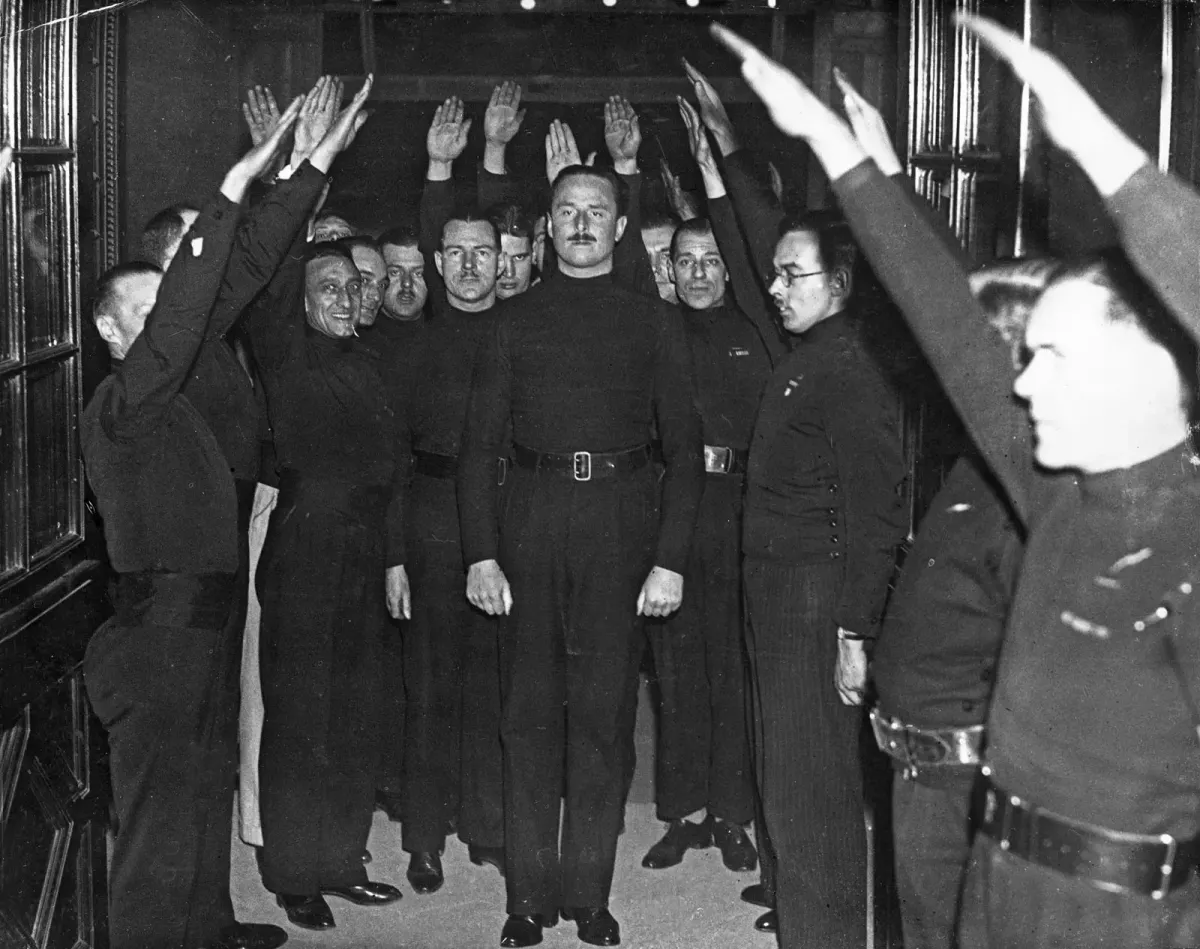
Locally, this led to frequent and violent clashes. In October 1933, the opening of branch buildings coincided with the initiation of weekly outdoor meetings that often descended into chaos. Local communists began disrupting BUF meetings and physically assaulting fascists, leading to one-sided confrontations that defined the movement's presence in the city. Despite leader Spanton Reid’s claims that they relied only on their fists for defence, the BUF’s presence incited deep tensions, such as the famous Edensor Road incident, where a local man challenged Mosley to a fistfight outside the Cheshire Cheese pub. At its peak, Stoke-on-Trent had up to 1000 members, making it the movement's largest power base outside London.
The Rhetoric of Hate: "Lord Haw-Haw" and King’s Hall
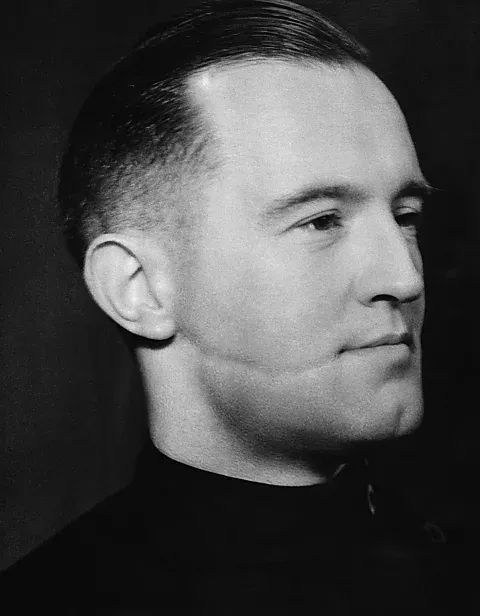
The recruitment tactic used by the British Union of Fascists (BUF) was as old as time: identify a "forgotten" majority and point the finger at a visible "other." Mosley and his lieutenants took the complex economic anxieties of the Great Depression and boiled them down to a simple, poisonous narrative of "us versus them." They attacked immigrants, communists, and anyone they labelled as "alien" to British interests, promising that a strong hand would "sweep the streets clean."
On 25 March 1934, this rhetoric reached a fever pitch in the Potteries. The movement chose this day to demonstrate its absolute local strength, orchestrating a two-pronged assault on the public consciousness of Stoke-on-Trent.
The day began in Longton Town Hall, where the audience was addressed by William Joyce. Long before he became the infamous Nazi radio propagandist "Lord Haw-Haw," Joyce was the BUF’s Director of Propaganda and their most effective, if most vitriolic, public speaker.
Known to his followers as "The Professor" due to his academic background, Joyce spent over an hour and a half pacing the stage, delivering a high-velocity tirade against "international finance" and "Oriental subversion." He spoke with a distinctive, rasping tone, the result of a razor slash he had received across his face during a street fight in 1924. In Longton, he painted a picture of a Britain being "bled white" by foreigners, a message designed to resonate with workers who saw their livelihoods disappearing as the local pot banks struggled.
The Main Event: Mosley at King’s Hall
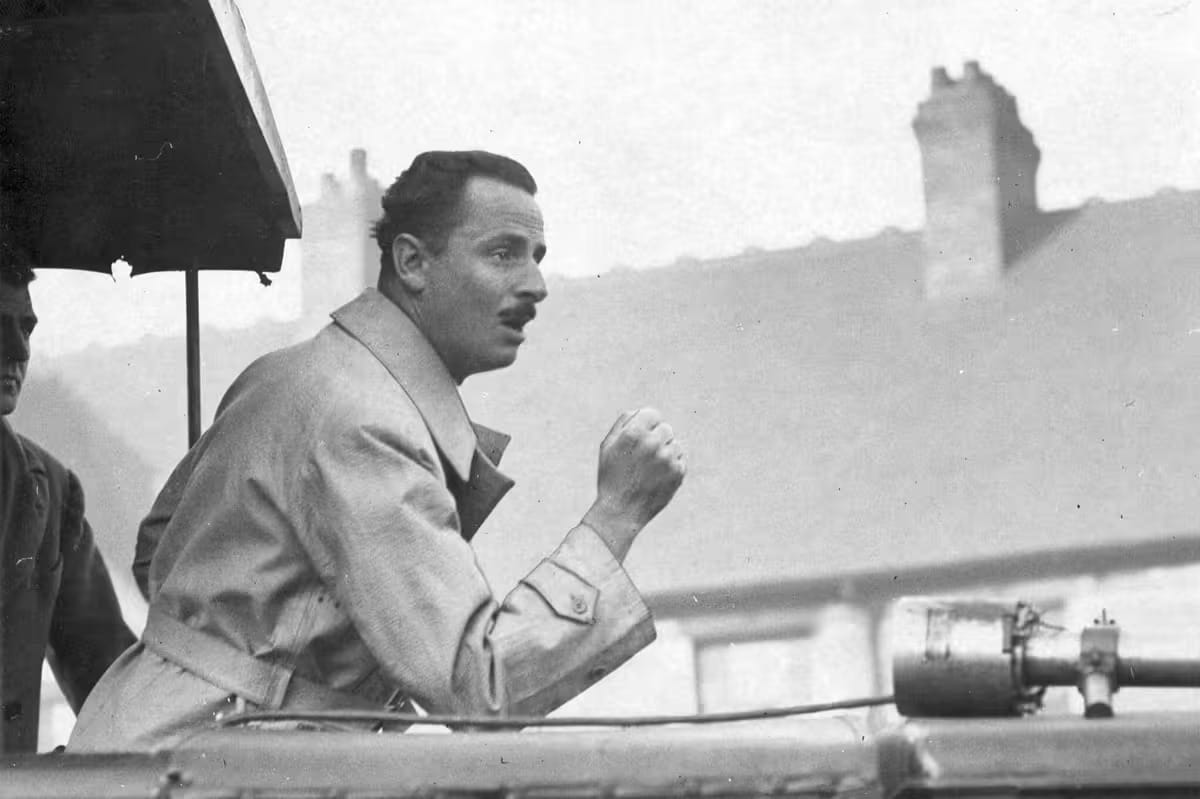
Later that same evening, the focus shifted to King’s Hall in Stoke. The scale of the event was unprecedented for a fringe political movement. Sir Oswald Mosley addressed a capacity crowd of 4,000 people, while an estimated 2,000 more were turned away at the doors by a heavy cordon of police and Blackshirt stewards.
Inside, the atmosphere was theatre at its most menacing. The hall was draped in the black and yellow banners of the BUF, and Mosley made his entrance preceded by a drum corps and a phalanx of flag-bearers. His speech lasted nearly two hours, a marathon talk that promised a "new era" for the pottery industry under a Corporate State. He told the crowd that the "old parties" were dead and that only fascism could offer the "iron will" necessary to restore Britain.
Clashes and "The Red Spot" of Staffordshire
While the King’s Hall meeting was relatively orderly inside, the streets of Staffordshire told a different story. The BUF did not confine themselves to the six towns; they targeted the smaller hubs of the county, seeking to create what they called a "Red Spot" of fascist activity in North Staffs.
The movement thrived on this friction. Every attack was framed as "red violence" in their newspapers, and every wound received by a Blackshirt was held up as a "badge of honour." They wanted the people of Staffordshire to believe that the county was in a state of civil war, and that only the Blackshirts stood between the "honest worker" and total chaos.

Wootton Lodge, near EllastoneWootton Lodge was built as a hunting lodge by Sir Richard Fleetwood between about 1580 and 1610. It was badly damaged during the Civil War and much of the interior was restored in about 1700. Sir Oswald ...View Full Resource on Staffordshire Past Track
The Moorlands Retreat: Wootton Lodge and the Nazi Connection
While the Blackshirts were bruising knuckles on the cobbles of Longton, Mosley was maintaining an aristocratic facade deeper in the county. Between 1936 and 1939, Mosley and his second wife, Diana Mitford, rented Wootton Lodge, a grand country house near Ellastone in the Staffordshire Moorlands. They lived there with their children, furnishing the estate with luxury and even enjoying local pastimes like sledging on the nearby Weaver Hills.
However, Wootton Lodge was more than just a family home; it was a site of high-stakes political delusion. During the 1936 abdication crisis, Mosley waited there in vain, fully expecting a summons from King Edward VIII to help him bypass Parliament and form an emergency government. The call never came.

The Dining Room at Wootton LodgePictured is the Dining Room at Wootton Lodge. Photographed by Country Life and featured in their magazine in March 1959. The panelling dates from around 1700 and the fireplace has a plain bolection-moulding; ...View Full Resource on Staffordshire Past Track
Even more chilling was the "infamous guest" who frequented the estate. Joachim von Ribbentrop, then the new German Ambassador to Britain, visited the Mosleys in Staffordshire during 1936 and 1937. Ribbentrop, notorious for his arrogance and for once giving an insulting Nazi salute to King George VI, spent his time at Wootton Lodge courting right-wing British aristocrats in a desperate attempt to forge a British-German alliance.
These diplomatic fantasies eventually crumbled. Ribbentrop went on to become Adolf Hitler’s Foreign Minister during the Second World War. Following the defeat of the Third Reich, he was convicted of war crimes and executed by hanging in 1946. The association with such figures deepened the public's growing revulsion, as the people of Staffordshire began to see that Mosley’s "Britain First" slogan was merely a mask for his proximity to an enemy power.
The Turning Tide: Violence and Public Revulsion
The facade of "genteel" fascism shattered on 7 June 1934 at the infamous Olympia Rally in London. Nearly 900 members from Stoke-on-Trent travelled in a convoy of 60 buses to witness what was intended to be a triumph of fascist organisation. Instead, they witnessed a spectacle of horrific violence where anti-fascist protesters were systematically set upon and brutally beaten by Blackshirt stewards.
For many of the local recruits, the events in London were a jarring culture shock. The majority of the Stoke contingent were disaffected ex-Conservatives and politically inexperienced young people who had believed the BUF was merely a more "virile" form of traditional patriotism. Seeing the naked brutality of the "Defence Force" first-hand caused a dramatic collapse in local membership, which plummeted by at least two-thirds in the weeks following the rally. Stokies, known for a moderate "politics of civility" rooted in tradition, began to recoil from a movement that now carried an aura of physical violence and cruelty.
By the mid-to-late 1930s, the movement in North Staffordshire fell into terminal decay:
- The Purge of the "Social Club": In January 1935, BUF leader A.K. Chesterton toured the Midlands and was horrified by what he found in the Potteries. Instead of a disciplined revolutionary force, he discovered a branch that had devolved into a drinking club with separate bars for "Officers" and "Blackshirts". In a fit of ideological rage, Chesterton closed the club on the spot, dismissed the entire leadership, and expelled all 300 remaining members in one go. It remains the largest purge in the history of the British fascist movement.
- Public Revulsion and Nazi Links: As the decade progressed, the BUF’s overt admiration for Adolf Hitler and Nazi Germany became a mark of shame. The movement’s shift toward aggressive antisemitic campaigning, while intended to mobilise the working class, instead served to further alienate the respectable citizens of Stoke-on-Trent.
- The Last Gasp in Hanley: The dying breath of the movement in the city occurred in 1938 at Victoria Hall in Hanley. A 23-year-old local pottery worker and Labour member named Jack Hood attended a rally with his lady-friend to hear Mosley speak. When Hood stood up to interrupt with questions, he was not met with debate, but was forcibly seized and thrown out by "very aggressive, burly" Blackshirts.
By the time war was declared in 1939, fascism had been pushed to the absolute periphery of life in the six towns. The internment of Mosley under Defence Regulation 18B in 1940 merely formalised the end of a movement that the people of the Potteries had already rejected.

Dr. Parkes' surgery, Normacot Road, LongtonThis property, possibly 84, Normacot Road, had been the local headquarters of the Blackshirts, a fascist organisation of the inter-war period. Their posters (reading "India Betrayal") were still visible ...View Full Resource on Staffordshire Past Track
A Cautionary Tale for the "Red Wall"
Mosley never won a parliamentary seat in Stoke on Trent. Despite his deep family roots in the Staffordshire soil and the early, genuine adoration the city held for his wife, the people of the Potteries eventually realised that the "salvation" he offered was a hollow promise. It was a movement built on the exploitation of fear, racism and the intended destruction of the very trade unions and constitutional traditions that protected the working man.
Today, the physical traces of fascism have largely vanished from our streets. The surgery at 84 Normacot Road has long since been demolished. However, the shadow it cast remains a stark warning for our current age. History shows that when economic despair meets a charismatic leader promising to "restore" a nation by targeting those deemed "alien" to its culture, the result is never the promised prosperity. Instead, it leads to the erosion of common decency and the fracturing of the communities it claims to protect.
The rise and fall of the Blackshirts in the six towns prove that even a community as resilient as ours can be briefly seduced by the politics of blame. But the ultimate legacy of Stoke-on-Trent is not that fascism arrived here; it is that the people had the courage to see through the theatre of uniforms and slogans and "send the racists packing". As we navigate a modern landscape filled with similarly familiar rhetoric, we must remember that our true strength lies in the unity Mosley tried to destroy, not the division he tried to sell.
Thank you for reading.
If you enjoy this work and would like to help support it, you can sign up for my newsletter so you don't miss anything, and find my Amazon Wish List here;


Below is my interactive Staffordshire map, which is now embedded at the end of every post. The map brings together all of the places I have visited, researched, written about, and filmed so far, with links to the stories behind them. It is designed to help you see what is around you, plan your own walks or days out, and explore Staffordshire’s history in a more connected and interactive way.